
by Anika D | Aug 26, 2022 | 5G
By the year 2024, 5G will overtake the 4G technology to become the most popular mobile internet access in the US. It is already hitting the mainstream in several industries, including the IoT, smart care, smart cities, healthcare, and whatnot. Now, how do you think 5G can make a difference in education? If you are wondering so, then read through:
 Source
While 5G technology has turned the whole world upside down (in a good way), its role in the education industry can’t be ignored. The addition of 5G in the education industry could revolutionize connectivity problems and improve the learning/teaching experience for both students/teachers.
Strong Connection Between Teachers and Students
In online education (especially during the Covid19 times), both learners and educators had to face a huge backlash on conferencing platforms. The recurrent connectivity issues caused hindrances in both teaching and learning. Thus, in such cases, 5G can work as a savior.
The fast technology will reduce the loading time and resolve the connectivity issue to offer a seamless learning experience. It will cut down the educators’ struggle and encourage quality education. Through its speed, 5G can also enhance peer-to-peer interaction in an online classroom.
On-the-Go Learning
 Source
5G is likely to offer more responsiveness and speed to devices. This is especially applicable to mobile phones, where students will be able to learn things in one go! The introduction of the best 5G phones has become an added benefit.
Not to forget about the flexibility that students would get beyond classroom structure. On-the-go learning will be extremely valuable for students who are busy or managing two things at once.
Intelligent Classrooms
5G can produce intelligent and advanced classrooms for learners. It will transform how students learn concepts, and teachers will be able to focus on individual students.
Not just that, 5G will encourage immediate real-time feedback to teachers for a better learning experience. It will integrate technologies like AR, VR, and IoT to ensure immersive lessons in classrooms. This signifies that 5G isn’t limited to changing blockchain and the metaverse industry but also education in the coming times.
Connectivity to Multiple Devices
5G can connect with millions of devices instead of thousands (as in the case of 4G). This will be useful for universities and colleges that are divided into several campuses. It will allow students to connect easily and use 5G emerging technologies to change the future (AR/VR) in a hassle-free manner.
Fast Video Downloads
5G can improve the speed of videos and live streams. As we all know, YouTube has several educational resources from teachers worldwide. But students often struggle to download or watch the videos swiftly. The recurrent buffering is a huge downfall!
When 5G comes into play, these YouTube videos will stream swiftly. Also, the videos could be downloaded within minutes rather than hours.
More Attention to Students with Special Needs
5G is an effective technology for students with special needs or those who need more attention. It can encourage robot apps to deal with such students and ensure their better learning. As these robots will be integrated with 5G technology, there will be no connectivity barrier or responsiveness issue.
So, these were some of the efficient ways by which 5G can make a difference in education.

by Anika D | Jun 1, 2022 | 5G, General
Huawei gets another shock as Canada Banned Huawei From its 5G Network. Canada is not the first country to have suspicions about Huawei. So, keep reading to uncover all the news; let’s have a look!
Canada Bans Huawei From its 5 Network

Source
The forecast number of 5G subscribers by 2025 will be 3 Billion, and with such rapid development globally, Canada banning Huawei is a big step. The reasons are security concerns that resulted from Government reviews which took around four years.
On May 19, 2022, the Federal Government announced that it’s banning the use of Huawei and ZTE equipment in Canada. They said that we reviewed the company security by our independent security agencies and after consulting our closest allies.
As a result, we faced pressure from the countries and our opposition to banning the Chinese company for serious security reasons. As a result, Canada will no longer deal with Chinese telecommunications firms participating in Canada’s deployment of a 5G network.
Will the ban Affect Canada’s Relationship With China?
 Source
With so many myths about 5G, Canada’s decision has made it a trending topic. So, let’s see how this will affect both countries. The rift between Canada and China started long ago, in 2018.
Then, Canada conducted the arrest of Huawei executive Meng Wanzhou in Canada under the command of the USA. As a result, Chinese authorities arrested Canadians Michael Kovrig and Michael Spavor. The issue was settled in September 2021, when all three were released.
For now, it’s too early to predict how it will affect the relationship between the two countries. But, the Chinese are criticizing this move. The Chinese foreign minister said this move has no evidence and violates the marketing economy and free trade and rules.
China has covered its 341 cities with a 5G network which is the maximum. With such great development, it was a daring move. Not only this, but Canada has planned to end all the contracts with Huawei for 4G networks till 2027.
What is 5G?
5G is the latest technology for wireless communication, which will have amazing speed and help many sectors to automate. However, faster communication and higher speed also welcome hidden security challenges when moving to 5G; precautionary steps are important.
5G can revolutionize by aiding AI, smart home appliances, the transport industry, etc. It’s a very flexible tech and allows billions of devices to connect. It’s launched and in progress in many nations.

by Anika D | Apr 26, 2022 | 5G, Emerging Technology, Networking
As the tech industry is ready to introduce the new wireless technology, it is unavoidable for myths to surface. The best example is how repeatedly links different conspiracy theories to 5G. Undoubtedly, 5G is one of the hottest topics in wireless circles. Below are five myths about 5G you need to stop believing:
Myth 1: 5G Boost the Spread of Coronavirus
The myth widely spread online is that 5G radio waves can transmit the Coronavirus. However, there is no proof of a link between them. Coronavirus does not get spread by any mobile networks. Instead, the transmission of Coronavirus occurs from person to person via direct contact or contaminated respiratory droplets. Moreover, WHO clarifies that Covid-19 is also spreading in some countries that do not use the 5G networks.
Myth 2: 5G Makes Smartphones Faster
Though 5G is around 100 times faster than 4G networks, it significantly impacts various industries, not just smartphones. In addition, the 5G network will improve IoT effectiveness, robotics, and self-driving cars when rolled out. For instance, robots can achieve full potential in manufacturing or other services by using 5G over the cloud.

Source
The low latency of 5G signals states that robots can work with humans. Also, operators can control them by using AR headsets.
Myth 3: 5G Can Cause Cancer
It is a wrong belief that has existed for a long time, but WHO has proved it false. The health authority clearly explained that there is no significant finding related to wireless technologies such as 5G to cause cancer. The only health concern that any wireless technology can bring is tissue heating. It is similar to the reaction of the human body to vigorous exercises.
The International Commission on Non-Ionizing Radiation Protection and WHO stated that the frequency of your phone radio should not cross 300GHz. Otherwise, it is not safe.
Myth 4: 5G Network Will Replace 4G
Another myth people spread is that a 5G network will render 4G obsolete. Moreover, the dominance of the latest wireless network is more like an evolution than an instant debut. However, it will happen eventually but not instantly.
History also proved that no wireless network has totally replaced its predecessor. In addition, 3G and 2G services are still the norms in some countries.

Source
Myth 5: 5G Uses More Energy Than All Other Generations
Wrongly anticipated as energy-intensive technology, 5G is the first mobile standard that integrates optimized energy consumption in its design. Antennas of 5G work on demand and transmit data when required. As a result, 5G antennas consume half the energy that 4G counterparts per GB transported.
There is a forecast that major developments in different sectors like IoT and smart cities accelerate the energy transition. Moreover, they improve resource management in the next stage of 5G deployments.
Takeaway – Myths About 5G
5G is the latest wireless network. It offers faster mobile communication by creating high electromagnetic frequencies. There is no evidence on myths about 5G that says that 5G negatively impacts the health of humans or animals. Many scientists have studied EMFs and found mixed outcomes.
by Anika D | Apr 15, 2022 | Emerging Technology
The 5th generation of wireless technology is rapidly rolling around the world. It assures the jump in reliability and speed, enabling mobile devices to behave like computers connected to the wired network. But 5G networks pose some security challenges facing enterprises and consumers. Hence, it increases the need for using IoT devices.
5G access to high bandwidths will connect more users and devices. It seems like a piece of good news. But unfortunately, 5G also comes with a boon for enterprises and cybercriminals. Here are some of the prominent cyber security concerns when moving to 5G networks:
Large Attack Surface
5G networks will connect with more IoT devices, so there will be more entry points for cyberattacks. Smart devices will multiply, and each will become a potential target for hackers.
Bigger Cyber Attacks Impacts
Enterprises will depend on 5G significantly more as compared to their predecessors. For example, smart cars, air traffic, hospitals, and others rely on 5G. In addition, there are several interconnected IoT devices or infrastructures. So, a security breach in an area has cascading effects on 5G network-connected devices.
Potential for Invasive Spying
Source
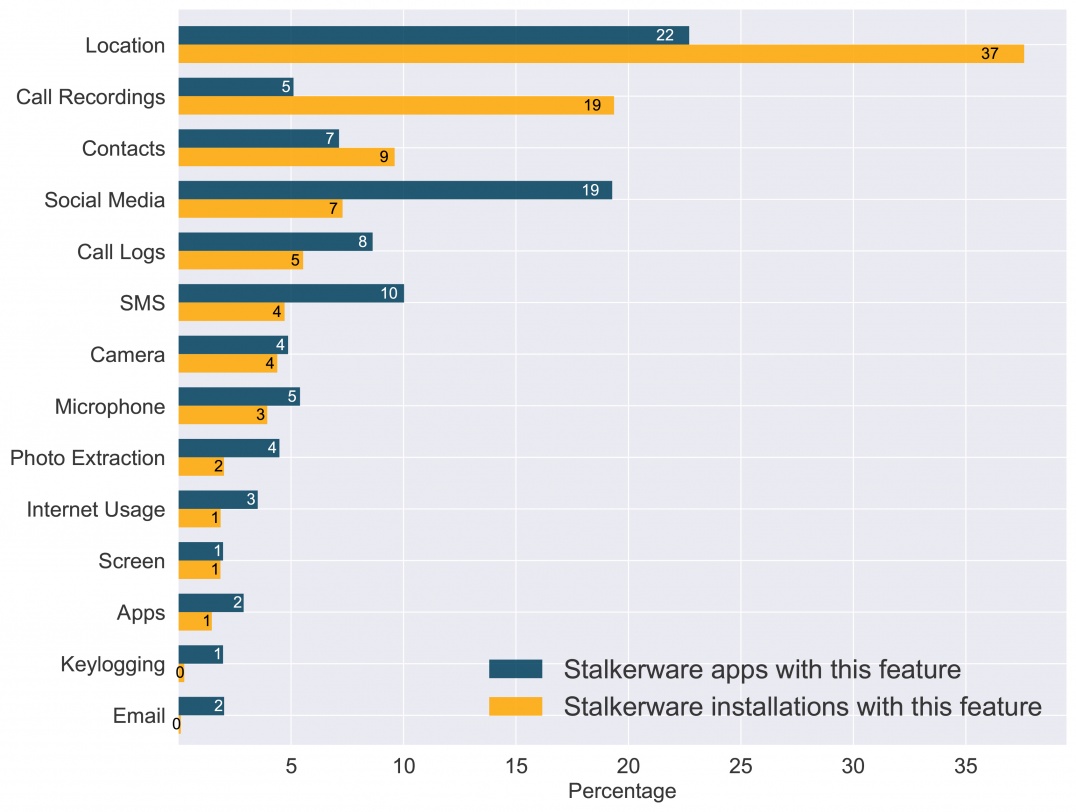
As per USA Today, manufacturers can use the enhanced connectivity of 5G devices to spy on consumers. In addition, cybercriminals can abuse the device with audio and video capabilities to listen and watch to unaware users. For example, recently, this type of risk came from government responses to the telecom company Huawei, and its 5G phone, the Mate X. Some international governments have been cautious about allowing Huawei on their networks for fear of state-sponsored spying.
Missing Security Objectives when Moving to 5G
According to Cornell University’s last year report, the 5G AKE protocol failed to meet different security goals needed by the 3GPP. AKE (Authenticated Key Exchange) is a security protocol for smartphone subscriber authentication.
Subscriber Activity Monitoring Attacks
The international researchers analyzed and found that the new security threat can exploit AKE protocols vulnerabilities. Additionally, these subscriber activity monitoring attacks utilize sham base station attacks, which cybercriminals have used while targeting security leaks in the network. Also, it targets AKE protocols and a vulnerability in the SQNs (sequence numbers) encryption.
Though 5G AKE protocols have advanced security against these fake base station attacks, the relay attacks could breach 5G’s SQN. In addition, these are more adverse than previous attacks because hackers can monitor user activity even if they have left the fake base station range.
More Threatening DDoS Attacks
Source
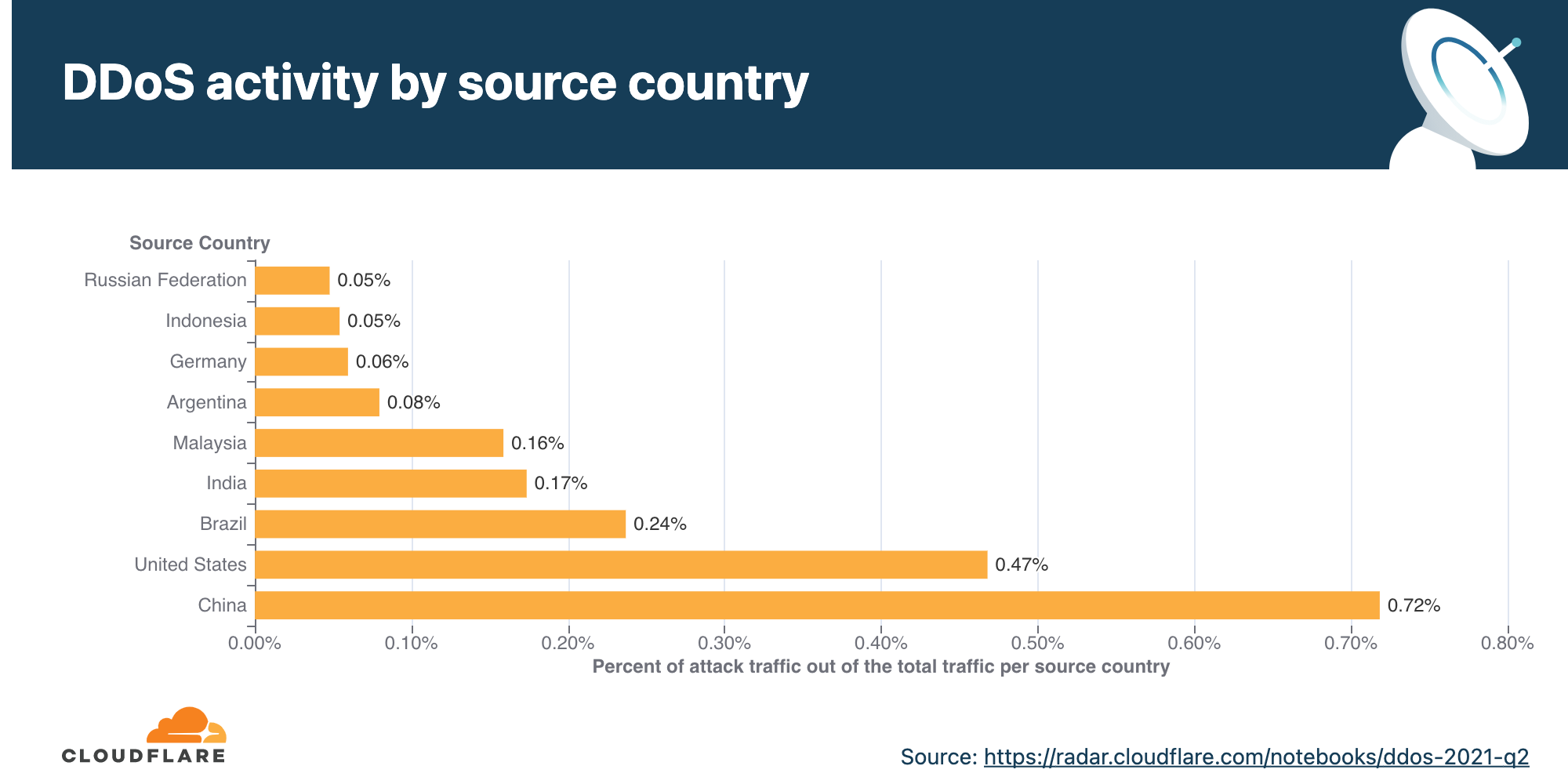
Stuart Madnick is an IT professor at the Massachusetts Institute of Technology. He said that the cyber attackers could use 5 G’s inactivity to lower the devices required to overwhelm industries in DDoS attacks.
5 G’s speed boost will make these attacks harder to handle and more efficient. DDoS attackers will strike faster in seconds, not minutes. Therefore, counter-responses to these attacks will also need to be quicker. Moreover, there will be more IoT devices for hackers to collect and harness for DDoS attacks. So, the frequency of these attacks will possibly increase.
Final Words
You can see many advancements and tech products rise from the increasing usage of the 5G network. But you need to cautiously and vigilantly approach the 5G network security needs to understand the potential 5G opens for privacy invasions. Hopefully, the next phase of moving to 5G will address these security challenges.

by Anika D | Dec 14, 2021 | Emerging Technology, General
Back in time, Star Wars (the movie) marked a new technology called Hologram. The Princess Leia scene was praised by a worldwide audience for its practical filming. Thanks to IWC CEO, recently Holograms came into the limelight again in the tech world. They are similar to 3-dimensional images that are visible through bare eyes.
Holograms are created by impeding light beams that can reflect actual objects. They are pretty impressive in displaying attractive products and technical notions. Recently, tech experts considered Holograms to be more efficient than video calling. While the technology is splendid, can it be a replacement for video calling?
Let’s find out.
The Story of IWC CEO
Nowadays, most technological innovation has some relation to the coronavirus, and Holograms are no exception. The sudden approach of the deadly pandemic caused travel restrictions. Thus, the IWC Ceo, Christoph Grainger-Herr, could not attend a global trade show in Shanghai, China. This was during the start of the pandemic, i.e. back in April. That’s when he came up with the idea of appearing through Hologram.
He attended the event as a 3D Hologram in 4K resolution. Through this technology, he could speak, listen, and see everyone in the event clearly. As per David Nussbaum, the boss of Portl (a US Hologram firm), he was connected to Shanghai from his office at Schaffhausen, Switzerland. Nussbaum said that Christoph Grainger-Herr had a chat with the executives. He also revealed a new watch during the event. Once everything was done, they disconnected him.

Source
What are the Characteristics of Hologram Technology?
With a consistent pandemic of over two years, technologies like Hologram are, indeed, a useful addition. They are realistic, sensory, and immersive replacements to video calls. They may soon be the technology that can help recover Covid19. The Hologram firm Portl describes their portal to be about 2.5 m tall. It has computerised boxes with glass-fronted surfaces. The booths can fit a life-size Hologram of an individual.
For better interaction, it has in-built speakers, cameras, microphones, etc. All these inclusions help to see, hear, and speak with the people. An individual will require a camera, speakers, microphones, and backdrop to connect. Portl has an app-controlled software system that uses the internet to connect an individual to a location with portals. You can connect to multiple people at once. The technology of Portl is used by famous names like T-Mobile and Netflix. Their cost starts from $60,000. However, they claim a lesser amount for renting portals.
As per David Nussbaum, Holograms are soon going to be a standard mode of communication between offices. By 2027, the Holographic display global market is said to reach $5.6 billion.

Source
Can Hologram Replace Video Calling?
So, could Hologram replace video calling? Well, that’s what the expert says! Gordon Wetzstein (a Stanford associate professor of electrical engineering and computer science) says Holograms are much more efficient than video calling. He considers them as a realistic innovation where one can make eye contact and interact precisely. Thus, these innovations, along with other 5G emerging technologies, can change our future.
Moving on, Portl boss David Nussbaum expects Hologram to be a replacement for standard video screens in video conferencing. He predicts this to happen in the upcoming five years. As per Nussbaum, Hologram will be an integral part of malls, lobbies, and businesses. However, let’s see what the future holds!
