
by Anika D | Nov 8, 2022 | Emerging Technology
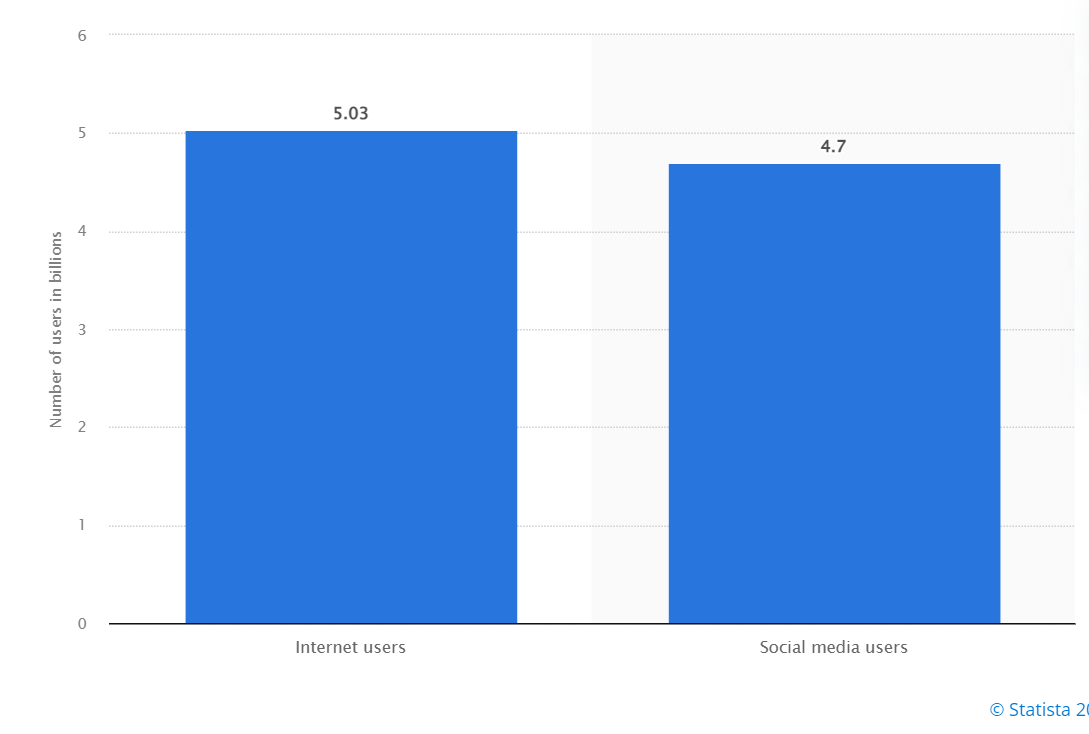
The COVID-19 pandemic has drastically accelerated the pace of technology evolution around the globe in the last two years. In 2022, the global digital population reached the mark of 5 billion, which is approximately 60% of the world population.
Businesses that aim to make it big in the mainstream competition should be able to adapt to this rapid evolution at any cost. Below is the list of the top 5 emerging technology trends of 2022 that will continue to rule the digital arena in the coming times.
Source
Artificial Intelligence and Machine Learning
AI and ML technologies have taken the markets by storm. Its tremendous growth makes it one of the top technologies of 2022. They are widely used in the healthcare industry. AL and ML boost clinical efficiency, enhance diagnosis accuracy and speed, and improve the patient experience.
Their advanced tools and models can significantly support and improve traditional decision-making and analytics frameworks. Enterprises can hire market experts to know how adaptive AI will change the consumer experience in various sectors.
Cybersecurity
Cybersecurity has been around for some time now. It is a robust technology that protects enterprises’ confidential and sensitive data. It monitors the content, identifies breaches, and strengthens vulnerable areas.
Businesses should invest a considerable amount of their revenue in cybersecurity to maintain the secrecy of their data and gain a lead in the competition. They can also consider hiring the best in the
Blockchain Technology
Blockchain is a centralized distributed database. It ensures 100% transparent and safe financial transactions without any central authority. This technology can help the finance, banking, and healthcare industries streamline their processes.
A distributed ledger system allows multiple participants to access the same data set simultaneously. This technology improves efficiency, removes friction, and builds trust. To get a hold of it, companies must know what are the different blockchain trends in 2022.
Internet of Things
Over the years, IoT has become one of the most important technologies of the 21st century. It has connected everyday objects like cars, kitchen appliances, baby monitors, thermostats, etc., to the internet.
It has added immense value to consumers’ lives and businesses’ competencies. The global market of the Internet of Things will have crossed $260 billion in 2021, and experts believe that sky’s the limit for this technology in the coming times.
Quantum Computing
Quantum Computing uses quantum mechanics laws like superposition to perform complex problem-solving. It helps businesses optimize investment strategies, discover products, and improve encryption.
It is a powerful technology that analyses enormous data sets within a fraction of a second. Even the experts of NASA consider quantum computing a very important technology. They believe it can take computing and analysis to a new level.
 Source
Summing Up!
So, these are the top technology trends of 2022 that businesses should know about. All these technologies encourage a better user experience and higher efficiency. It is high time companies start researching about and consider investing in these technologies.

by Anika D | Oct 1, 2022 | Blockchain
Blockchain is one of the most transformative technological innovations in this era, with promising use cases for several industries. It is an open database model secured by decentralization and encryption. Blockchain captures information in blocks in a shared ledger by storing a synchronized copy on all systems within the network. Many companies started recognizing its benefits; thus, this technology is greatly developing. Here are some blockchain trends for 2022:
NFT Boom

Source
NFTs or Non-Fungible Tokens started gaining momentum in the last year. These tokens will remain relevant in the coming future. They have become a means for different artists to generate significant money in auctions by showing their digital artworks in exchange. This trend has also found a response in the fashion and gaming industries. For instance, Dolce and Gabbana set a record of $6 million for selling their exclusive NFT items.
Rise of Metaverse
Nowadays, various technology companies, analysts, and marketers are actively discussing Metaworld, calling it the future of the Internet. The meta-universe concept revolves around a permanent 3D universe combining different virtual spaces. It allows users to work, play, or meet in 3D spaces. Cryptocurrencies are significant for the metaverse as they enable you to make a digital economy using virtual collectibles and tokens. Cryptocurrency wallets like MetaMask and Trust Wallet are also beneficial for the metaverse. Moreover, block technology can give you reliable management systems.
Blockchain in Healthcare

Source
Data protection is very important in the healthcare industry. Therefore, blockchain technology has a great demand in this sector. However, medical record security is not the only thing limited to blockchain trends. This technology also enables you to establish drug supply chains. In addition, the blockchain will serve in the verification of the educational credentials of health experts.
Central Banks Digital Currencies
A few years ago, blockchain solutions or cryptocurrencies seemed unrealistic. Moreover, it was impossible to consider any country accepting cryptocurrencies as a legal form of payment. However, El Salvador was the first country that adopted Bitcoin as a valid payment form in 2021. So, many businesses can use Bitcoin for payment purposes and several countries are following in the footsteps of EI Salvador in 2022.The increasing
According to various industry experts, blockchain forecasts for 2022 hint at the possibility of many countries adopting Bitcoin as a legal tender. The increasing remuneration fees for overseas money transfers will be the foremost driving factor for cryptocurrency adoption as legal tenders. Another area for blockchain development in 2022 will be evident in the concept of national cryptocurrencies. It will be related to CBDC (Central Bank Digital Currencies), which suggests that central banks create their coins instead of decentralized coins.
Eco-Friendly Blockchain

Source
Bitcoin and Ethereum are the most popular cryptocurrencies that have a green competitor, “Cardano.” It has become the third most valuable cryptocurrency as miners look for some environmentally friendly options. The mining impact on the environment has become part of the environmental agenda. For instance, Iran and China temporarily banned mining because computers consume too much energy and cause power outages.
Undoubtedly, the Cardano token wins against the Bitcoin and Ethereum backdrop. For example, if Bitcoin consumes 77.78 terawatts per hour of energy, then Cardano consumes only 0.006 terawatts per hour.
Final Words
Blockchain is one of the advanced digital technologies these days. It offers improved transparency, security, data immutability, and accessibility than conventional networks. While blockchain has been driving various changes in different sectors, it is still evolving. Thus, close observation of blockchain trends is vital for navigating the complexities of the blockchain landscape.

by Anika D | Sep 14, 2022 | Blockchain
Are you a smart contract developer? If yes, then your work can be tedious. It is because blockchain technology is not only about cryptocurrency. You can use it to design everything, starting from the voting system to medical record keeping. However, only a few applications of blockchain technology have jumped from theory to a functional prototype till now. But first of all, let us learn about smart contracts and their benefits:

Source
What are Smart Contracts?
Smart contracts are software development programs executed on the basis of specific logic and agreements. These programs run on localized networks whose records cannot be tampered with or changed after registering transactions. So, they are a reliable way to perform transactions requiring transparency, trust, and anonymity.
Benefits of Smart Contracts
The key benefits of smart contracts are as follows:
- Autonomous: Smart contracts offer automation which means no third party can make changes in decisions or agreements.
- Secured: Smart contracts enable processes to complete securely. Also, encryption makes them work as intended.
- Interruption Free: If smart contracts start execution, they cannot be interrupted or stopped.
- Trustless: There is no need to trust other parties to carry out a transaction. It does not require trust as an integral part.
- Cost-Effective: Smart contracts make trades cost-effective with the removal of intermediaries.
- Fast Performance: Smart contracts get executed faster than the old-fashioned traditional method. All the parameters are pre-defined within the smart contracts, so it only needs to match them before execution.
- Accurate: Smart contracts are error-free. The only thing is that you need to code them correctly.
10 Practical Examples of Smart Contracts on Blockchain Technology
Here are some of the examples of smart contracts development:
Smart contracts can develop a strong B2C relationship in real time. For instance, suppose there is a shoe brand in partnership with a streaming music service. It gives a complimentary subscription time if the buyer creates a playlist for listening while they jog.
A smart contract also sends customers a discount on new shoes and suggests similar tempo songs to add to the playlist. In addition, it can enhance customer expectations by supporting runners who like tracking fitness and listening to music.
Another useful smart contract practical example is security. You can simplify or improve the capitalization table management with smart contracts. It means that there is a channel between the parties, including security custody chains. You can also use it for automatic payments, dividends, stock splits, and liability management. In addition, contracts can allow you to make workflows digitized and reduce operational risk.
Nearly all industries worldwide can use smart contracts to improve the speed and security of record-keeping. One of these industries that stands to benefit a lot is the healthcare industry. The global healthcare computer systems currently hold trillions of patients’ medical records. Though these healthcare organizations have invested a significant amount in security, current storage methods are far more vulnerable to cyber crimes than their blockchain-based equivalents.
You can securely encrypt or keep the databases of personal health records using blockchain technology. In addition, this technology facilitates using a private key, meaning only certain individuals can access the data. Some other blockchain smart contracts examples include storing receipts, issuing prescriptions, storing test results, general stock management, etc.
-
Fill the Gap in Entertainment Consumption
Blockchain technology can improve consumers’ interaction with their preferred entertainment choices. For instance, non-fungible tokens (NFTs) authenticate ownership of digital assets. A smart contract can simplify the selling, buying, and trading of NFTs. Moreover, there is interest in using smart contracts to pay independent creators like filmmakers, authors, and musicians. This automation eliminates the need for intermediaries for processing royalty payments.
You can revolutionize trade finance with the help of smart contracts. Undoubtedly, it can allow trade payment initiations and international goods transfer by using a Letter of Credit. In addition, smart contracts can also improve the liquidity and efficiencies of financial assets.
It is important to find the industry standards and implement them accordingly to make smart contracts work in trade finance. It happens especially in international trade and cross-border payments. You can solve the legal complications and provide a better way to solve problems among parties with proper integration.
-
Maximize Productivity for Human Resources
You can automate an HR manager’s workflow via distributed ledger technology. For instance, an HR employee can perform reference checks and confirm employment history. A smart contract can ease the onboarding of employees by simplifying verification tasks. In addition, blockchain technology can automate responsibilities like enforcing employee contract terms, penalties and paycheck processing.
Smart contracts have two significant examples when it comes to the property market. Firstly, you can use them to record property ownership. The use of smart contracts is more cost-efficient and faster, so it makes them a better alternative to existing systems. It also means you can use them to record the ownership of all properties from land, buildings, phones, and watches.
Within the housing sector, smart contracts can eliminate the need for expensive services like those provided by housing brokers and lawyers. This technology also means that sellers can handle the transactions by themselves for the first time ever.
Some areas of supply chain management can benefit from enterprise blockchain. Smart contracts can increase the product’s traceability and materials. For example, blockchain software can track the origin of items as it moves between international supply chains by calculating tariffs. Some organizations are also exploring smart contracts on blockchain technology. In such cases, blockchain has the potential to minimize errors and increase efficiency.
Another example of smart contracts is keeping a record of the product development stages. Two parties will sign the contract to activate it. For example, you can record the stages, and other relevant information to the smart contract with the development of a project. If the parties agree to such things as split payments, the agreement will initiate their release when reaching the milestones.
-
Efficient Utility Distribution
The opportunity to use blockchain technology is growing in the energy industry. For instance, it can automate electricity delivery from an energy firm to a consumer. Executing smart contracts can simplify energy trading by connecting small energy producers. Also, a smart contract can certify renewable energy sources. Blockchain can process and record transactions, making implementation promising.
The Bottom Line
Are you interested in adopting smart contracts of blockchain technology for your businesses? If yes, it is better to look for the potential of smart contracts. The only limitation is your imagination. Smart contracts offer a unique way of solving all business problems. So, it is best to explore them asap.

by Anika D | Aug 31, 2022 | Emerging Technology
Enterprise technology trends and developments are at an all-time high and evolving daily. This amazing growth was especially witnessed after the pandemic when flexibility, security, and smart work were most needed. With the help of these robust technologies, enterprises have new opportunities and can achieve goals efficiently. So, here’s a complete list of top enterprise technology trends to watch in 2023.
Let’s have a look!
The Rise of Automation and AI
 Source
Artificial intelligence and automation are at full wiggle after the pandemic. With hybrid and work-from-home cultures, businesses are looking for technology that can fulfill repetitive tasks efficiently. Thanks to AI, its chatbots, and the ability to perform simple tasks, enterprises readily use its applications.
As a result, 83% of IT leaders say AI is transforming customer engagement for the better. Moreover, robotic process automation (RPA) is one of the fantastic applications of AI. It builds software bots to carry on advanced proceedings. These automatic systems can adapt to the environment and dynamically modify their algorithms to give real-time solutions.
Use of Cybersecurity Mesh
With all the hustle of main goals, you may be making serious cybersecurity Mistakes. After COVID, cyberattacks have become frequent, and protecting your data and activity must be a priority. Cyber security mesh technology uses scalable security controls that can be transferred to various networks at different locations.
It has multiple components, like several supportive layers, such as consolidated policy management, security intelligence, and identity fabric. It aims to protect individual endpoints rather than attempting to preserve all assets with a single technology.
Rise of Web 3.0
Web 3.0 is the third generation web built using AI and the semantic web. It is powered by machine learning and artificial intelligence to give another level of experience. How will it help enterprises.? Well, it uses blockchain technology which is decentralized and completely safe. Moreover, it will allow:
- Transparent transactions and dealings of business
- Advanced security measures that will avoid breaches
- It will provide more data insight because it gives feedback in form while practicing anonymity
- It’s more affordable than other websites.
Cloud-Based Solutions
Flexibility is the new trend for enterprises, and some trending technologies are making it work successfully. Various cloud-based solutions allow employees to work from any part of the world. They can access data, stay safe and work in the most suitable environment.
The trend of hybrid and work-from-home environments is becoming quite popular. Applications like Microsoft Teams, Cisco UCM Cloud, and Webex help boost productivity and stay in touch. Many companies are turning to desktops as a service (DaaS) and virtual desktop infrastructure (VDI) to promote a flexible work culture. Some top cloud computing startups of 2022 are offering amazing cloud solutions to many firms. Moreover, these solutions are completely cloud-based, affordable, and very fast compared to others.
Use of Blockchain Other Than Money
You may have heard several times about blockchain in cryptocurrency in monetary transactions. But that is not it. Blockchain can do wonders and help enterprises to become more efficient. It uses end-to-end encryption and privacy to create incredible cyber security.
Some of its applications that will trend are:
- Tracking the location of goods
- Monitoring assets and machinery to record activity and output
- It can store a massive amount of data
- Financial accounts in record management.
After deploying blockchain technology to small business segments, you will notice how this technology can transform every sector.
Adoption of low code/no-code Development
 Source
Low code, no code, also known as LCNC, will be a trendsetter technology in 2023. These platforms are specially built for noncoders by coders to do the functions of any enterprise. Luckily, it requires no knowledge of complex coding. Of course, some software developers develop the platforms, but it gives power to non-specialists to support agile operations in the enterprise.
This will reduce the costs, make nontechnical staff work on it and bring on transparency which is great. It’s becoming robust with the help of security, efficiency, and new-age technology.
Use of Modern Languages
One of the top enterprise technology trends to watch in 2023 are the use of amazing languages. These languages are relatively new but have incredible benefits for enterprises. In 2023, enterprises will bid goodbye to standard languages and welcome modern languages. It includes Rust, TypeScript, Swift, Dart, Go, Kotlin, etc.
They are trending because they use modern computer hardware and change how software is developed. For example, many large companies like Amazon and Microsoft are moving ahead with Rust. These languages are called “the most beloved language” because of their flexibility and efficiency.
Personalization Using IoB
Do you know Gartner predicts that by 2023, 40% of the world’s population will have their activities tracked digitally? Well, that’s for understanding the customer pattern. One very beneficial enterprise technology is the Internet of Behavior (IoB) which will help the organization to achieve personalization according to their customers. It will notice people’s behavior as they interact with apps and devices.
Moreover, it will bring insights into business intelligence, big data, and customer data platforms. This data records buying history, customer interactions, social media awareness, etc. Furthermore, it helps enterprises to customize their services for growth. So this will bring useful data to provide the best services in every enterprise sector.
Infrastructure as Code (IaC) Adoption
Many enterprises will use Code (IaC) infrastructure in 2023, as it is one of the most anticipated trends. It is also called software-defined infrastructure or software intelligence as code.
It allows the administration and provisioning of computer databases with the service of machine-readable definition files. Moreover, it stores IT infrastructure in software codes rather than hardware configuration tools. As a result, enterprises can check the software rather than look for each hardware.
Wrapping Up
These were the top enterprise technology trends to watch in 2023, which are the future. Gradually, all these technologies are becoming robust to transform businesses completely. Moreover, its flexibility and security make tasks easy. This immense rise was noticed after COVID when the work culture changed to digital mode. So, keep checking here for all the latest developments.

by Anika D | Aug 18, 2022 | General
Blockchain technology is an interesting subject emerging in the tech industry and beyond. It offers a way of recording transactions, designed specifically to be transparent, secure, and highly resistant to outages. This technology is young and changing at a rapid pace. Despite its positive aspects, there are some misunderstandings and confusions regarding its nature, such as:
Blockchain and Bitcoin are the Same
The common misunderstanding is that Blockchain technology and Bitcoin are the same thing. Originally, Blockchain is a database of stored transactions across various computers in the distributed form of blocks. Each block has a link with the previous one, creating a chain of blocks. On the other hand, Bitcoin is a decentralized digital currency that you can buy, sell and exchange directly without any intermediary. Bitcoin information gets stored in the public Blockchain.
Operations of all Blockchains are Similar
There are three kinds of Blockchain, each having its own pros and cons. Some are more expensive, and some are greener than others. The variation between these Blockchains makes it difficult to tackle them from a regulatory point of view. To tackle this issue, you must understand the different ways blockchain works and the attributes each of them possesses.
Blockchain is a Big Database in Cloud
Blockchain is a huge database with added properties. Therefore, its entries never get deleted. The growth of the file is indefinite, and its replicas are on all the nodes in the P2P network. Though Blockchain is a huge database, it does not store any physical information (like a document or image). It only holds a document proof of existence (in codes) but not the document.
Blockchain is Free
One of the common myths is that Blockchain is free. Although blockchain cost regarding Bitcoin has been associated with using computers to solve mathematical problems, the actual price shows a different picture. Bitcoin mining needs powerful and expensive hardware with high electricity consumption. So, there is no reason to consider Blockchain free.
Blockchain Signifies Efficiency
Though Blockchain is powerful, it does not have a magic wand that can make everything better. Originally, some sectors benefited from it and have faster and more efficient systems. However, it cannot work for everyone. Some businesses are better with centralized non-blockchain solutions. So, performing a thorough analysis before implementing anything would be best.
Blockchain Does Not Include Verification
The common problem with many traditional transactions is that ledger can get easily tempered to reflect incorrect information. Distributed databases are one of the fundamentals of Blockchain technology. It ensures all parties can access records in the chain. It is decentralized so no single person has complete control over Blockchain, making it difficult to tamper with.
Finding a Blockchain Expert is Easy
Various Blockchain experts have neither designed nor implemented Blockchain systems. However, skilled Blockchain resources are difficult to find. Moreover, they are very expensive.
To Sum Up
There is no doubt about the Blockchain potential, but this technology is far from perfect. Moreover, misconceptions will only make matters worse. So, it is critical to find the truth about Blockchain technology to improve its implementation.
