For some situations, like office work, the primary safety hazard might be a paper cut. In industrial professions, employee safety is at risk every day. Because of legalization of marijuana, industrial accidents could occur more often because marijuana can impair an employee’s coordination and motor skills.
Where is Marijuana Legal Right Now
Despite many states legalizing cannabis in the United States, marijuana remains an illegal drug according to the federal government. The government classifies cannabis or marijuana as a Schedule I drug. Schedule I drugs, under the federal Controlled Substances Act (CSA), are those drugs that possess a high potential for abuse and for which there is no currently accepted medical use. The DEA reviewed its classification of marijuana in 2016, and affirmatively chose to keep marijuana on the list Schedule I drugs.
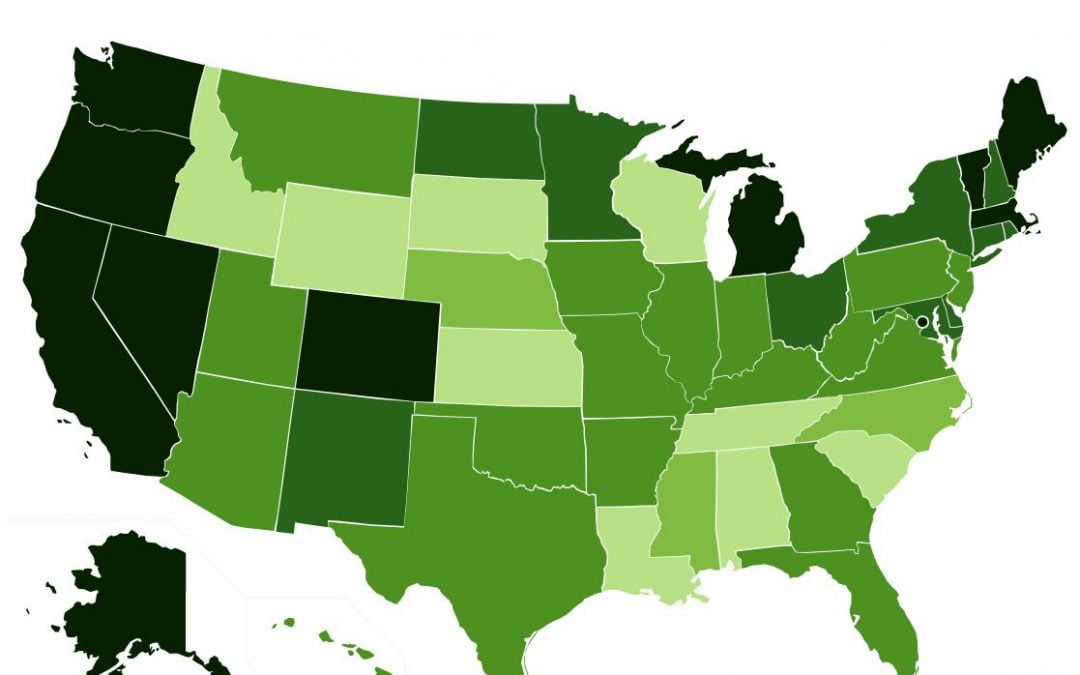
A nice map from DISA Global Solutions shows the marijuana legality by state with links to the state law.
Map of Marijuana by State
How is Marijuana Use Impacting Safety on the Job?
People try marijuana to get “high.” The psychoactive ingredient, tetrahydrocannabinol (THC) in marijuana stimulates the brain to produce dopamine which relaxes the body. According to an article by WebMD, How Marijuana Affects Your Mind and Body, affects sensory perception (brighter colors, louder sounds), reaction time, motor skills, and increase risky behavior. For an employee working in an industrial environment, operating machinery, or driving industrial equipment, these effects can be deadly.
As a result of cannabis use, an employee’s job is terminated. When this happens states typically side with the employer even if the employee has a medical marijuana card. However, marijuana is still Schedule I drug which is illegal according to federal law. Federal law supersedes state law.
If an industrial accident occurs and a worker is injured, worker compensation is not provided if an employee was under the influence
Most health insurance programs do not cover medical cannabis as part of their list of prescription drugs
What Makes a Good Drug Policy?
An interesting study on the impact of Drug-Testing programs by the National Center of Biotechnology Information (NCBI) shows the effective use of pre-employment drug testing concludes it is useful to employers choosing job applicants. An employer drug policy should include:
Management training to ensure enforcement the drug policy
Employee support options including company assistance or local resources
Clearly defined use and possession guidelines
Criteria for post-accident analysis
Rules employee’s conviction or arrest for drugs
Legal authorities review drug policies and workplace procedures to ensure reduction of litigation by employee. Policies may change based on state or even federal law and could change frequently. The drug policy should have a date and acknowledgment by the employee. By having this information, litigation against the employer is protected.
Cannabis picture by pixabay
The health and safety of your workforce depend upon you to keep them safe.
If you are working in nursing, manufacturing, construction, or other industries that are commonly affected by airborne hazards, the respirator fit test is probably not a new term to you.
Generally speaking, a respirator fit test is a test that will show whether a person can wear a tight-fitting respirator without leakage. The test must be conducted using precisely the same respirator, which should be worn by the worker, and when the worker needs to wear glasses or another protection when wearing the respirator, he or she also needs to wear them during the test.
Respirators are classified as either loose-fitting or tight-fitting. Since respirators cannot protect you if they do not fit tightly, the respirator has a tougher standard. OSHA requires respirator-fit testing only on tight-fitting respirators, and those respirators that do not depend on a tight seal around the face of a person do not undergo testing.
You know what a respirator is but do you know which your staff is going to need?
Qualitative V.S. Quantitative Respirator Fit Test
There are two significant types of respirator fit tests. It is either qualitative or quantitative respirator fit test. Here are the distinctions between the two respirator fit test.
Qualitative Respirator Fit Test
A professional conducting a Qualitative Fit Test Photo Credit 3M
Qualitative fit testing is a pass / fail test technique that utilizes your sense of smell or taste or your response to an irritant to identify leakage in the face piece of the respirator. The real amount of leakage is not measured by qualitative fit testing. Whether the respirator performs or fails, the experiment is based on identifying your face piece leakage of the sample material. OSHA accepts four methods of qualitative fit testing:
Bitrex, which leaves a bitter taste in your mouth;
Irritant smoke, which can cause coughing;
Isoamyl acetate, which smells like bananas; and
Saccharin, which leaves a sweet taste in your mouth.
Half-mask respirators are usually used for qualitative fit testing-those that cover your mouth and nose. Half-mask respirators, as well as elastomeric respirators, can filter face piece respirators-often called “N95s.”
Quantitative Respirator Fit Test
To identify leakage, quantitative fit screening utilizes a device to assess the real quantity of leakage in the face piece and does not depend on your sense of taste, smell, or irritation. During this sort of fit test, the respirators used will have a probe attached to the face piece that will be connected by a hose to the device. OSHA accepts three quantitative fit testing techniques:
Quantitative Respirator Fit Test Photo Credit Levitt Safety
Ambient aerosol
Controlled Negative Pressure
Generated aerosol
Quantitative fit testing is used for tight-fitting respirators.
Many employees need to wear prescription glasses or personal protective equipment, like safety goggles or earmuffs, while doing a job. If you fit into this category, then during the respirator fit test you must wear these items. Wearing these items during testing ensures they do not interfere with the fit of the respirator.
Before using a respirator in the workplace, the fit of your respirator must be tested and retested annually to ensure that the respirator you are using still fits you. The testing utilizes the particular make, model, style, and respirator size you’re going to use.
While it may be easy to lose track of respirator fit tests, it is an essential element in compliance with OSHA. Furthermore, the respirator fit test is a vital instrument to keep your staff secure and healthy from environmental hazards. The OSHA page is an excellent tool if you want to learn more about the specifics of respirator fit testing.
U.S. workers in their workplaces are subjected to heat. Although heat exposure disease can be prevented, thousands of people get ill every year due to occupational heat exposure, and some
Worker in Hot Sun
instances are deadly. In the first few days of living or working in a warm or hot settings, the majority of outdoor fatalities (50 percent to 70 percent) happen because the body requires to build a heat tolerance over time progressively. The building tolerance method is called heat acclimation. Failure to acclimatize is a significant risk factor for deadly results.
Heavy physical exercise, warm or hot environments, an absence of acclimatization, and the use of clothing containing bodily heat are occupational threat factors for heat illness. Hazardous heat exposure can take place in and outdoors and can happen in any season if the conditions are appropriate not just in hot waves.
OSHA needs employers to provide their staff with secure working environments. Moreover, while you are unable to regulate the climate, you can enforce heat stress hazard reduction strategies and processes. First, let’s look at what heat stress is.
What is Heat Stress
Heat stress occurs when the body can no longer maintain its average temperature. An amount of heat-related diseases can lead to heat stress. Hot cramps, heat exposure, and heat stroke are the most prevalent.
Those employees most susceptible are outdoor employees and workers in hot temperature work settings such as firefighters, bakeries, farmers, construction laborers, miners, boiler room personnel, and manufacturing workers. Employees who are 65 years or older, are overweight and have heart disease or higher blood pressure, or may receive medication that could be impacted by intense heat, are at higher risk of heat stress.
Control of Heat Stress
If adequate checks are not enforced, heat exposure and heatstroke may be deadly. Employers have a legal obligation to safeguard their employees’ health, including:
A system to always investigate, record and report all related heat illness and injuries;
Allocate 5 to 7 days for employees (new arrivals or employees who return from vacations) to acclimatize before workers begin work in the hot season;
Ensure that a risk evaluation is done to determine where there are risks to heat pressure and who is at danger of heat-related disease;
Ensuring the implementation of an efficient heat stress program ;
Ensure all employees have access to drinking water ;
Ensure that supplied food is evaluated to provide a healthy balanced diet with nutrition, electrolytes, and calories, to sustain high-temperature work;
Ensuring the implementation of engineering control measures to eliminate a reasonable risk of heat exposure;
Ensure that all executives, supervisors, first-aid workers and staff undertake the necessary training and education;
Ensure that the work is self-paced and provide adequate breaks in terms of heat stress condition;
Ensuring immediate access to medical care for workers with suspected heat illness cases;
Ensure that workplaces comply with the midday break for outside staff during the summer months ;
Provide medical clearance for heat treatment for those suffering from chronic disease (e.g., hypertension, obesity) or those required to use certain prescription medicines.
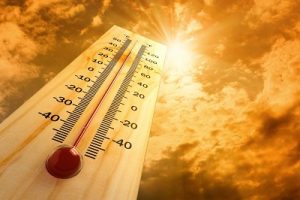
Thermometer in Sun
Engineering Controls for Heat stress may include:
Adding ceiling insulation to reduce the transfer of solar heat;
Provide shaded work spaces as much as possible;
Providing cooled and air-conditioned resting places with accessible water or electrolyte beverages (not salt or saltwater) ;
Use of exhaust ventilation above heat-generating procedures such as extraction hoods;
Use of forced air ventilation such as fans to boost skin airflow and boost evaporation and cooling; and
Use of cooled air from air conditioning
In cases where these controls are not sufficient to reduce exposures to or below the applicable limit, the use of heat-protective or auxiliary body cooling clothing or equipment, such as water-cooled clothing, air-frozen clothing, cooling vests and watered over carrying, should be added to these controls. Furthermore, when the weather service predicts that a heatwave is probable to happen, a heat warning program should also be introduced and reviewed.
Since the 1940s, Industrial Hygiene has been a profession. When my son came home and told me he was going to be an Industrial Hygienist, I thought he was going to clean people’s teeth in an industrial environment. The more I learned, the happier I was, that he has chosen Industrial Hygiene as his career field.
Industrial hygiene is the science of protecting and enhancing the health and safety of people at work and in their communities. Health and safety hazards cover a wide range of chemical, physical, biological, and ergonomic stressors. Those dedicated to anticipating, recognizing, evaluating, and controlling those hazards are known as Industrial Hygienists.
ABIH
In a nutshell, an Industrial Hygienist ensures workers are healthy and safe.
Industrial Hygienists analyze work environments and work procedures. They inspect and monitor workplaces to ensure compliance with regulations on safety, health, and the environment. They do some or all of the following:
Inspect, monitor, and evaluate workplace
environments, equipment, and processes for safety standard compliance
Prepare written reports incorporating their
findings
Create and implement workplace processes that protect
workers
Prepare and provide training programs to educate
employers and workers
Make recommendations and demonstrate the use of
safety equipment
Investigate incidents and accidents to identify the
cause and identify preventative actions
Industry can be a mixed debate for worker safety. Profit margins are high on the list and are in constant scrutiny. Industry creates jobs, provides economic benefits, especially for the local community.
The industries that Industrial Hygiene professionals can work in are Mining, Factories, Pharma, Construction, Wildfire Management, Environmental, Oil and Gas, and Foundries.
Industries that require Industrial Hygienist
Each of these industries has its illness catalysts:
Respirable crystalline silica and inhalable dust,
coal, mineral, welding fumes, smoke, and other particulate aerosols.
Petroleum-based products including semi-volatile
organic and volatile organic compounds, and liquid, vapor, mist and gas
exposures.
Noise and vibration from production, maintenance
tools, and equipment.
Workers have certain health risks:
Carbon Monoxide, Mercury, Beryllium, and Lead Poisoning
Debilitating Hand conditions
Spastic anemia
Silicosis, Lung Cancer and Pulmonary
Tuberculosis
Mental Illness
On the job injuries including falls and slips
Hearing Loss
Electrical Magnetic Frequency Damage
A good Industrial Hygiene and safety program includes
analyzing and monitoring respiratory protection, confined space, hot work,
hearing conservation, Personal Protective Equipment (PPE), lock-out/tag-out,
and other health and safety initiatives.
The job market is in high demand for Industrial Hygienists.
Median Pay in the United States: $79,940 Annually ($36.03 per Hour)
Number of Jobs: 88,390 with a growth rate of 4% per year (Does not include self-employed)
Expected employment change, 2016 to 2026, 8,600 more jobs
Bureau of Labor Statistics
The general requirements are the following, although some
employers will require more:
Bachelor’s degree in Industrial Hygiene or
related field of study
Ability to work on a team and individually
Time management and strong organizational skills
Adeptness for the usage of specialized equipment
and monitoring instruments to measure various hazards, such as airborne
contaminants or noise pollution
Ability to teach employees and develop training for
workers
Attention to Detail
Capability to create policies and procedures for
safe practices in the workplace
Ability to travel
Strong written and oral communication skills
Ability to study for, receive and maintain
certifications
An Industrial Hygienist at the very minimum requires a bachelor’s degree.
Masters degrees are not essential, but as competition increases advanced degrees will help compete. However, doctorates are necessary for those that wish to do academic research and to become a specialist. Certification is recommended.
The Industry Profile is interesting as well. 35% work in the Federal Government, 41% work
in State and Local government, 40% work in Management, Scientific and Technical
Consulting Services and 16% work in the Management of Companies and
Enterprises. The states with the highest
percentage of jobs are Texas, California, Pennsylvania, Ohio, and New York.
Most of the Industrial Hygienists I have met are very happy with their job. They do not do the same thing every day, and they enjoy helping workers stay safe. In general, they are very intelligent and compassionate and are extremely concerned about preventing the workers in their charge from getting sick.
If you are trying to figure out what career field, I highly suggest investigating this career field.
Throughout history, air pollution has been a problem. Not only smog but fumes from excessive coal use in households as well as dirty air released from manufacturing, mining and increased emissions from industrial processes. Respirators were invented.
Londoners even coined a phrase, “pea-soupers,” because, since the 14th Century, London has been affected by thick smog.
Because of poor air, civilizations learned to deal with air pollution by using respirators of different types whether basic or technologically advanced.
Pliny the Elder, Library of Congress [Public domain]
In the first century A.D., an inventor named Pliny, the Elder, utilized an animal bladder to protect Roman miners from inhaling lead oxide dust. Although primitive, his idea was considered the very first recorded respirator invention.
In the 16th century, Leonardo da Vinci proposed using a woven cloth dipped in water over the face to protect against the toxic chemicals used in chemical warfare.
Expanding on the need for protection of the industrial worker’s lungs, inventors offered other solutions in the centuries that followed.
In 1849, Lewis Phectic Haslett invented the “Lung Protector” which allowed a mouthpiece fitted with two clapper valves and used a wool filter to keep out dust. The first U.S. patent, US 6529, for a “Lung Protector” was recorded in 1849 and was for a respirator that utilized one-way valves moistened with sheep wool to filter dust.
In 1860, A Scottish chemist, John Stenhouse, decided to use charcoal in a wide variety of air-purifying devices. He invented the first respirator that captured toxic gases from the air. He especially wanted to protect firemen and first responders.
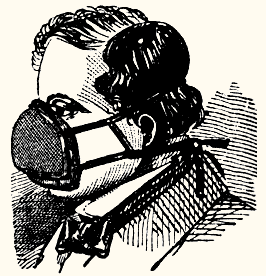
John Stenhouse Mask, Public Domain
As even more, innovative scientific minds gained interest in air purifying devices, a race occurred to develop respirators that could protect against a broader range of air pollutants, such as hazardous gases.
In 1871, British physicist John Tyndall took Stenhouse’s mask, added a filter of cotton wool saturated with lime, glycerin, and charcoal, and invented a “fireman’s respirator,” a hood that filtered smoke and gas from air. Mr. Tyndall exhibited this respirator at a meeting of the Royal Society in London in 1874.
Also in 1874, Samuel Barton patented a device that ‘permitted respiration in places where the atmosphere is charged with noxious gases, or vapors, smoke, or other impurities.’ The first to include rubber and a metal hood structure, the Samuel Barton Respirator had a filter located in front and two eyepieces made of glass. The metal canister design contained lime, glycerin-soaked cotton wool, and charcoal.
Haslett Gas Mask, Frogstorm
In 1879, Hutson Hurd’s design improved on the design of the Haslett Lung protector and invented the design of the cup-shaped mask. The Hutson Hurd’s H.S. Cover Company manufactured these cup-shaped masks well into the 1970s.
Respirator Inventions World War I
After World War I, the military became much more involved and developed an intense interest in the use of respirators primarily as a defense mechanism against chemical warfare. Because of the military interest and money, the advances in the creation of inexpensive, useful filters increased in the 1930s. The filters were initially made with resin-infused dust and were further developed using fine particulates of glass fiber that could eliminate particulate matter. The design of the filter helped with the breathing ability that was not inhibited by the filters.
Post World War I
After World War I, the United States and the United Kingdom faced some of the worst air pollution cases in history.
In 1943, Los Angeles, California (LA), long known for its poor air quality, suffered from its first smog incident. LA’s factories and massive vehicle industry were to blame for the smog.
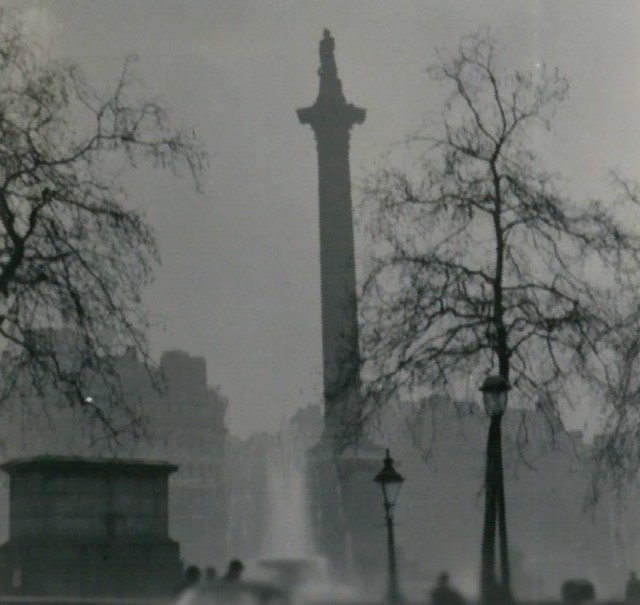
Nelson’s Column during the Great Smog of 1952
In December of 1952, the “great smog” or “big smoke” caused the city of Long to be engulfed in a thick layer of air smog which lasted for five days and resulted in 12,000 plus fatalities and 100,000 reported cases of respiratory illness. The smog was caused by the cold weather, lack of wind and the subsequent use of too much coal to heat the country.
In 1965, the Army provided an Emergency Respirator that consisted of Lucite, machined channels and a cover place that was secured by screws or adhesive. The mask did not have any moving parts but did have an amplifier that air could flow through. The technology was developed by the Harry Diamond Laboratories which later became part of the United States Army Research Laboratory.
The Future of Respirators
According to the World Health Organization, the top three of most air-polluted cities in the word rated by Particulate Matter (PM) concentration are 1) Kanpur, India, 2) Faridabad, India, and 3) Gaya, India. Other countries have issues including Pakistan, Uganda, China, and Qatar. Global air pollution problems and continuing climate change will put pressure on developing countries and will allow more advancements in the use of respirators.
The bigger the monetary fine, the more public health exposure, the more advancement of air pollution initiatives will continue. Labor laws, like the OSHA’s Respirable Crystalline Silica Standard standard for both Construction and General Industry, will become more refined to help protect workers. Because of the laws, respirators will continue to advance technologically.
Respirator technology is becoming sleeker, and most people wear primitive forms of respirators, like surgical masks, for protection. Surgical masks only work for airborne viruses and not air pollutants. In Japan, young people have used surgical masks as a fashion accessory to not only cover the face but protect from airborne viruses.
The human factor of respirators of the future will depend on comfortable fit, the mood of the wearer, and the actual protection the respirator provides, especially in an industrial environment.
The need for raising awareness of protecting your lungs from air pollution continues to be profound. Surgical masks will not work to eliminate PM, and in industrial situations, specific processes should always have the employee where a respirator mask.





![Pliny the Elder, Library of Congress [Public domain]](https://upload.wikimedia.org/wikipedia/commons/4/49/Pliny_the_Elder.png)