by Anika D | Dec 10, 2021 | 5G
Each new generation of network technology has many improvements, and 5G has no exception. Credible sources and reports online project that the 5G network is going to deliver ultra-fast internet speed with surprisingly low latency.
The new network generation 5G may change the future up to a great extent. But one question that most people are asking is, “Is 5G better than 4G?” In this blog, we’ve tried to answer this question in detail.
So, let’s get started:
5G vs. 4G Frequency
The 4G technology launched with new frequency bands and spectrum, ranging from 600 MHz to 2.5 GHz. The 5G technology has two frequency bands. The major difference comes from the second band. So, let’s discuss both frequency bands in 5G:
- Sub-6 GHz Bands: Like in 4G, the transmitted frequency is below 6GHz. Cell phone towers use this band to transmit frequency.
- High-Frequency mmWave Band: It has a millimeter-wave and frequencies above 24 GHz. It makes 5G a great technology for urban areas that require high frequencies on large bandwidth to keep everything connected.
5G vs. 4G Speed Test
Source
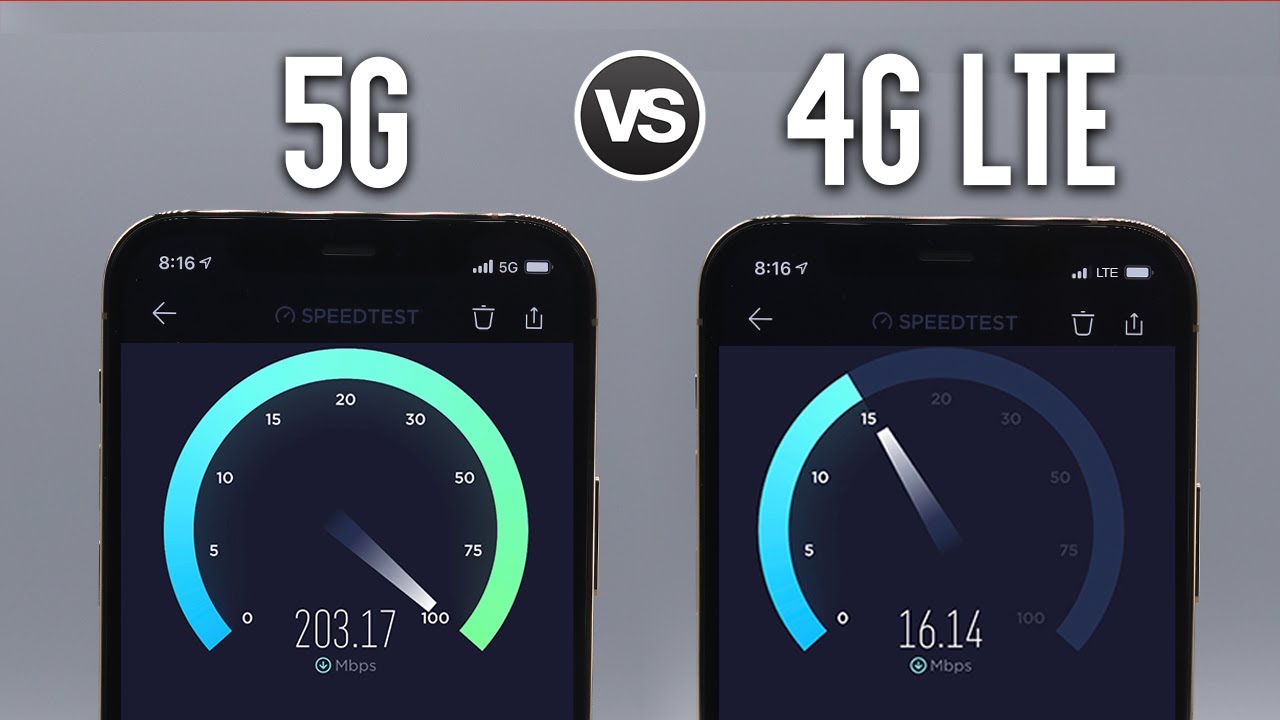
5G aims to provide wide coverage in urban areas with extreme data rates. On the other hand, 4G can provide a peak downloading speed of a few hundreds of megabits per second (Mbps). But the speed reduces to 10 Mbps or even less due to a latency time of above 10 ms.
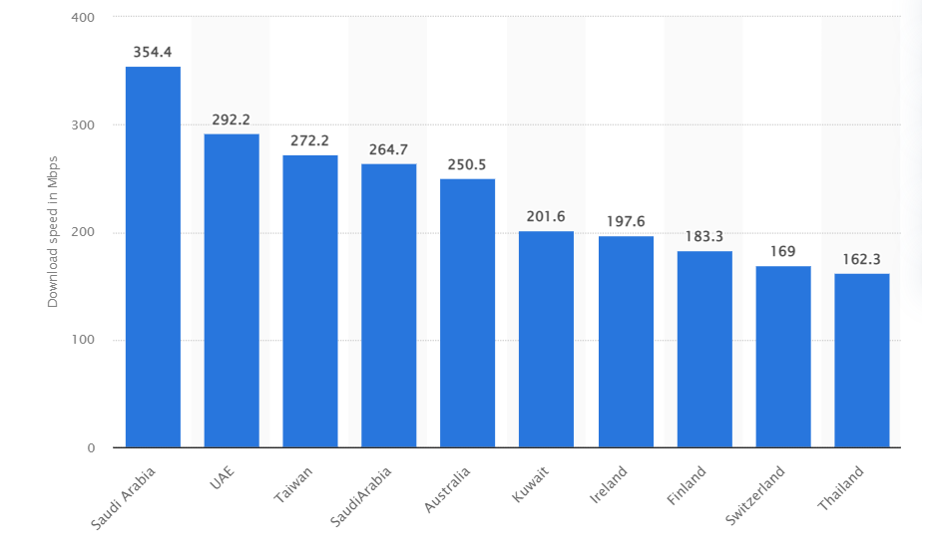
5G mobile broadband is designed to provide a minimum 100 Mbps speed in urban locations. The latency time is expected to be only four milliseconds (ms), while the peak downloading speed can be 20 Gbps. So, you can download video content instantly in high quality. As of 2020, users in Saudi Arabia achieved the fastest 5G download speed standing at an average of 354.4 Mbps.
Source
5G vs. 4G: Latency
Latency refers to the time a network takes to respond to a request. 5G promises to deliver significantly improved latency as compared to 4G. As of now, 4G provides a latency of 50 ms while that of 5G is 1 ms.
As you see, 5G is 50 times better compared to 4G. So, this is what makes 5G smartphones superfast, with minimal buffering. These phones are far superior for gaming and media streaming. You don’t have to wait for hours for your phone to respond to your commands.
4G vs. 5G Comparison Table
| |
4G |
5G |
| Year of Introduction |
2009 |
2019 |
| Average Data Speed |
30 Mbps |
60 Mbps–1 Gbps |
| Wireless Features |
HD streaming, social media, complex gaming, interactive apps like Uber |
Gigabit speeds, home internet, AI-based networking, automated sensors |
Can 5G and 4G Work Together?
The quickest answer is yes. When we use 5G on EE, we’re actually using both the 4G and 5G at the same time. The 5G network can’t replace 4G altogether, at least as of now. Both make a great combination if you want to achieve speed and low latency.
The full roll-out of 5G may take more time than we expect. However, in 2022, we can expect it at a larger scale compared to 2020.

by Anika D | Jun 23, 2021 | 5G, Emerging Technology
Technology today is progressing rapidly. That’s why people still predict what the future holds. While some dream of flying cars, others wish for better medical infrastructure. Having said that, some emerging technologies like 5G can surely help in achieving the same.
Today, we will be talking about five emerging technologies that will change our future. So without any further ado, let’s begin.
Artificial Intelligence
The first emerging technology that we are going to talk about is Artificial Intelligence. AI is a machine that has the potency to grasp and comprehend any task, just like humans. These technologies are going to be the intellectual equals of humans in the coming time.
Talking about AI, narrow AI has become quite prevalent in today’s time. They are a part of different technologies like Google Maps, Siri, and SPAM filters. With time, AI is going to be a part of most of the things we do in the future.
AR/VR
Both AR/Augmented Reality and VR/Virtual Reality have become integral parts of emerging technologies. With the fusion of low hardware prices and social media platforms, VR is the next hit.
Augmented Reality or AR is also an efficient part of numerous smartphone applications. It is a great way to sell and promote business.
It is an integral part of the retail industry too. That’s because people can now try their favorite clothes without leaving the house. Instead, they can check their outfit in the virtual avatar and see if it’s worth buying.
These technologies can be combined with 5G for an efficient outcome. Wondering about 5G, check out the next section.
5G and IoT
You know 4G. The speed is good, and the experience is exceptional. Having said that, 5G can be the next big thing after 4G. It is 100 times faster than 4G.
The technology can render multiple device connections, reduced latency, and robust signals. It can further be helpful for the IoT or the Internet Of Things.
By fusing IoT and 5G, people can enhance the potency of the internet for various activities. Moreover, every entity can be benefited from the powerful combination of both.
To mention IoT solely, the technology can shorten numerous procedures. It will also increase productivity and make it easier to execute various tasks.
Biometrics
Biometrics is one of the best ways to secure relevant data. That’s because it uses biological markers to recognize any user.
Thus, without any access to fingerprints, face, or voice, it will be difficult for anyone other than the owner to use anything. Unfortunately, when it comes to passwords, most of the users do not think much about them.
They usually assign a password that’s easy to remember and crack. It then becomes convenient for the hacker to predict the credentials. In that case, biometrics can be a helpful way to secure relevant data. Besides, its one-touch user interface has made it more appealing.
Robotics
With progressive technology, robotics has evolved from the virtual world and entered into the real one. It is considered an effective tool for the modern generation. Technology is rendering opportunities to transform the future world.
Both robots and humans can work together to offer better help. They can be helpful for the medical and healthcare industry as well.
For example, in the future, robots can replace a few hospital staff to perform specific tasks. As a result, it can ease the treatment process and make it much more convenient for the healthcare industry.
So this was the list of 5 emerging technologies that will change our future. Each of these is likely to impact our future in a positive manner.

by Anika D | Jun 2, 2021 | 5G
AR, MR, and 5G are some of the most essential aspects of technological-friendly work. The blend of three can help in manufacturing interesting devices with a wow factor. Let’s discuss such devices and how the 5G connection has played an important role in making AR and MR real.
The Evolution of Display
The main challenge with technologies like AR or VR headsets is that people do not want anything more than limited accessories. When we talk about that, they want things to be the size of the glasses. Anything that exceeds that size is not preferred by the users.
However, incorporating the intensity of graphics and display technology for a high-quality VR/AR is quite unlikely at present. With that being said, numerous organizations are trying to achieve the same. These companies are trying to experiment with unique designs to render a satisfactory experience.
It separates the computing elements from head-mounted glass displays. These designs encourage the use of smartphones and wired connections to the glass for an appealing experience.
Apple is known to be working with similar concepts. Maybe it involved a wireless connection between an iPhone and a glass-like display. However, people believe that it’s going to take years to reach that level of proficiency.
5G: The Future of Augmented Reality
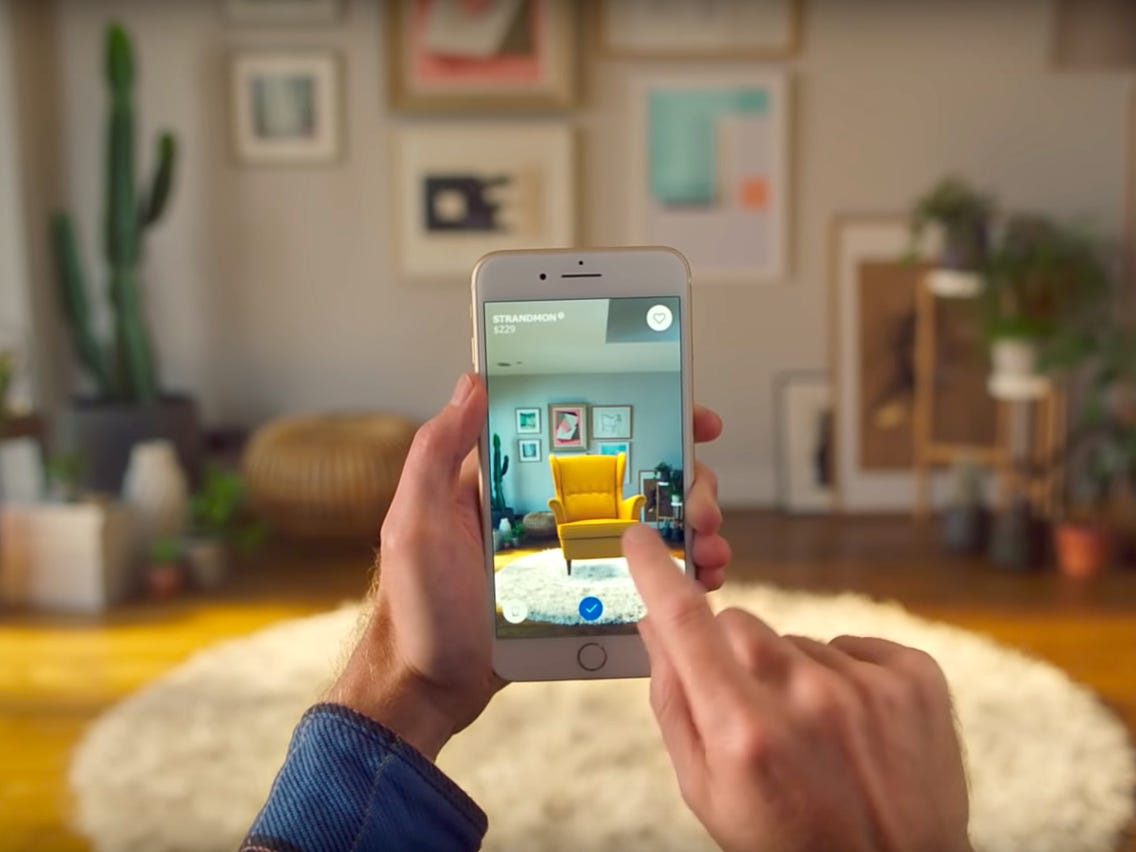
Augmented Reality is likely to benefit a lot from the energy-efficient 5G technology. Thus, 5G is considered as the future of AR. In the Augmented World Expo show, Qualcomm, which is a smartphone and 5G chipmaker, announced a distinct two-part design for release. The decision was taken in presence of numerous other smartphone makers and telecom providers globally.
Companies like Panasonic, Oppo, Pico, and NReal have come up with XR viewers that get connected through a USB-C cable. The USB-C cable gets connected to Qualcomm Snapdragon 855 or 865-powered 5G smart mobile devices. These devices are available from brands like Oppo, Asus, OnePlus, etc.
Qualcomm elaborated the in-depth details of the XR Optimized program. It confirms that the XR viewers and smart devices should follow similar critical Technical specs and software standards. This will allow them to work together efficiently.
5G Technology
One of the major parts of these devices is the 5G technology. For detailed image quality and location-specific Information, both XR viewers and smartphones require cloud computing connection.
Being a fast and low-latency technology, 5G on viewers can deliver high-resolution images from clouds. It can enhance the overall experience of head-mounted displays. Besides, it can also integrate location-specific details.
Microsoft is also known to introduce 5G in their business-focused HoloLens 2 MR headset through a plug-in module. In addition, XR viewers are different from HoloLens 2. In this case, HoloLens 2 has all the computing elements within the headset. The outcomes are quite good and it’s costly too.
However, HoloLens 2 will use the 5G connection to render access to cloud computing resources. Moreover, concepts like spatial anchors can encourage two people wearing HoloLens and interacting with the same virtual objects.
It’s quite clear that AR and MR are likely to be the future of technology. With that being said, 5G is going to be the spinal cord of the same. The perk of an always-connected 5G link is quite clear.

by Anika D | Jun 2, 2021 | 5G
5G is the 5th generation mobile network and the brand new global wireless standard after 4G. The technology is known to bring faster speeds, low latency communications, and high data caps in smartphones.
Nevertheless, it’s quite a talk in the gaming industry too. Wondering the link between 5G and gaming? Here are some of the ways by which the technology is in trend.
Fast
There is no doubt that 5g is fast. When we say fast, we mean really fast! If we compare both 5G and 4G, 5G has 20 times the speed of 4G.
If you are planning to download any piece of data, the time taken by 5G will be less than 4G. From the gaming’s perspective, the outcomes will be quite desirable.
About 10 games can be downloaded with 5G while 4G would still be in its first half. Fast Internet speed will render you a better gaming experience too.
Latency
5G renders a lower latency. You will notice a difference of 15 milliseconds. It can go from 20 milliseconds to 5 milliseconds.
While the difference might seem small, it’s quite noticeable during gaming. Gamers who have opted for 5G have seen much less latency while playing games with latency issues. It also rendered them a better multiplayer experience.
Unlocks the Reality of VR

5G can also transform the future of virtual reality. The technology can eliminate the term ‘Virtual’ from ‘Virtual Reality.
That’s because the higher speed and lower latency can free the VR headsets from cords. The processing power will be able to sustain in the cloud and the graphics will be enhanced. It will also price an authentic experience to gamers where they will get haptic feedback.
Turn AR into Reality
When it comes to technology, Augmented reality has surely been in the limelight lately. With that being said, 5G can enhance Augmented Reality by rendering the technological support for immersive game creation.
The Ericsson consumer lab report states that gamers have a takeaway slogan of ‘Ready, Steady, Game!’. It signifies that getting away from reality is the primary aim of playing video games for gamers.
Thus, the in-depth experience rendered by the 5G to AR can assist gamers to get away from reality. As per Ericsson’s study among AR gamers, 4 out of 10 gamers consider AR to be fascinating with immersive games.
Better Flexibility
Lastly, 5G technology can give the much-needed flexibility in games too. When we talk about flexibility, it will be similar to the ones you get in streaming platforms like Netflix.
The energy-efficient technology has the speed to stream both AR and VR content from the cloud. So, yes, you are certainly going to note some transformation.
Conclusion
If you are a gamer then we hope that these 5 things about 5G are worthwhile for you. Be it the speed or flexibility, 5G is going to promise a better tomorrow.
Besides, in the gaming industry, gamers are going to see some epic transformation in numerous aspects. Overall, 5G is a step towards an impressive gaming experience.
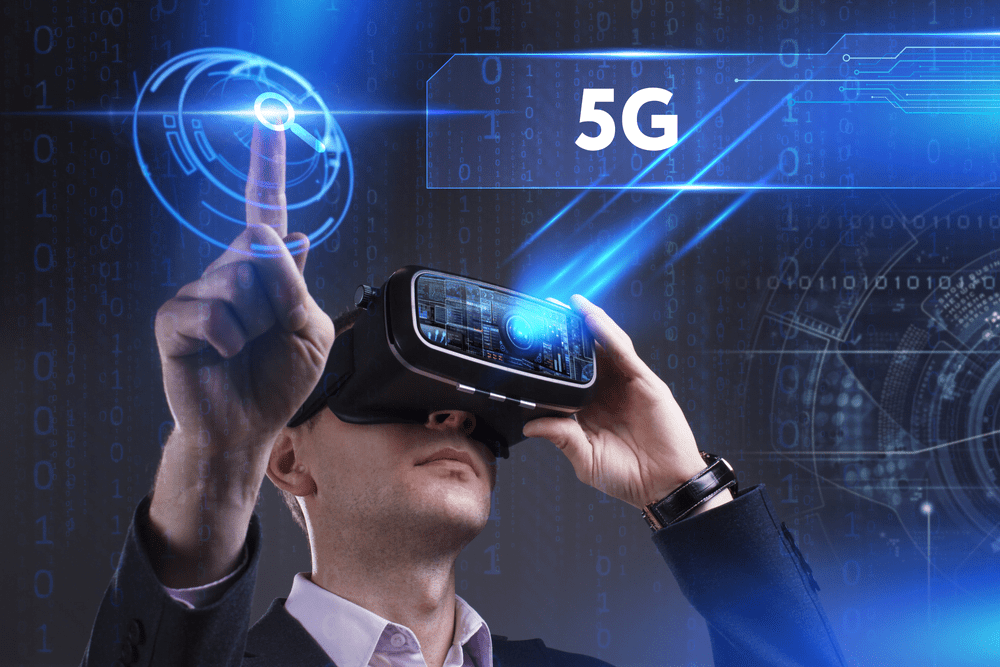
by Anika D | May 21, 2021 | 5G, Industrial IoT, Networking
5G is all about high-speed data transmission and hyper-connected life. This new technology offers great connectivity and creates new value for both individuals and enterprises.
With 5G, technologies like virtualization, cloud computing, edge computing, artificial intelligence, network slicing, and automation will drive the new business models. In addition to these technologies, the 5G also impacts the VR Market and increase the growth of the VR sector as well.
According to the study by Gartner, by the next year, 100 million consumers will use VR for online shopping and in-store. This becomes possible due to the high-speed network – 5G.
Here are the other benefits of 5G for the virtual reality and augmented reality sector:
The Cloud
Currently, many VR head-mounted displays (HMDs) need a powerful system to run them. This means you cannot enjoy VR everywhere as it is confined to a certain location.
But, the 5G can increase the storage, power consumption, and processing power from the PC into the edge cloud. It means. With 5G, you only need a headset, which works for VR anytime, anywhere.
Further, this next generation of networks will add new sensations and give an amazing user experience to VR users.
Connectivity in 5G Technology
Note that VR and AR, are sensitive to network performance. It means any interruption can have a significant negative impact on using VR.
Nowadays, consumers are demanding more data than ever, especially for quality videos and audios. And existing spectrum bands are unable to cope with the increasing demand for data transfer. This can impact VR users in many ways.
But, with 5G, there will be no such issue of more data. Hence it gives you the best VR video experience. Here are some features of 5G that make it best for VR and AR technology.
- Data Transfer Speed: The complete 360-degree frame of VR application or immersive gaming needs to be sent at below than 20 ms lag. This is why 5g is a must for VR, as it can transfer more data without creating any disturbance.
- No Data Congestion: The higher bandwidth consumption of 5G helps in providing a non-pixelated and non-lagged experience for HD and 4K videos. It also does not create any congestion when you play videos or games in VR mode.
- High-Frequency Band Required: The highest bandwidths such as 10Gbps and 40Gbps are possible with a 5G network. This is what users need to get a high-end experience of VR and AR.
Final Words
In the current time, when everything is moving toward digitalization, the demand for high data increases. To fulfill this demand and to give VR users a great experience, 5G technology is the solution. It is also assumed that the 5G network can provide billions of connections, which is a must for VR technology.
