by Anika D | Mar 28, 2021 | 5G
At present, the utilization of power and energy-related pollution has become a major economic and operational concern in the telecommunication sector. Energy efficiency is gaining importance with an exceptional rise in network traffic and the number of connected devices. And, 5G is energy efficient!
With 5G, the mobile business has an opportunity to increase traffic for better performance. At the same time, it can also reduce energy consumption across the network. The design requirements of 5G states that usage of energy can be reduced to nearly 10 % as compared to the current 4G networks.
An Already Visible Gain In Efficiency
In the cities where 5G testing is in process, the new network already shows twice as energy-efficient as 4G. And these are merely the first deployments, carried out with technology that is still young and with networks that are of very light loads.
This development will take a technological leap forward. In 5G networks, the load of traffic that flows on the system is superior for energy consumption of the same array of magnitude.
Mechanically it results in a decline in the allocation of electricity consumption per bit. 5G will be more efficient as compared to the 4G in terms of the number of bits that deliver for a given unit.
The technical and operational levers support this evolution because of the optimization of processor and transmitter technology. In this way, it becomes possible to achieve both openness and security in the 5G World.
Built-In Antennas For More Efficiency
A foremost breakthrough made by 5G alarms the implementation of new antennas, which is known as “Massive Multiple-Input Multiple-Output”. This technology uses multiple transmitters, which configure in a two-dimensional array.
This system connects to a base station and manages the transmission and reception of radio signals. The base station systems and massive MIMO antenna communicate with remote clients; hence the wireless protocols analyze the requirement of minimum power for communication.
As a result, it cut down the energy utilization for wireless energy transmissions on the base station as well as on client devices. Thus, 5G networks with beamforming take about four times less energy than 4G networks.
Advanced Sleep Modes
One of the major developments allied with 5G is the extensive use of deep “Sleep Modes”. The basic principle behind it is very simple. It means that when there is a gap in the network activity, the base station can reduce energy consumption through its sleep mode.
The new base station can enter sleep mode in a very short gap. The best part is that even in high-use mobile networks, the utilization does not go beyond 20 percent. So, they can go into sleep mode rapidly and for a period as long as possible.
Full Duplex
With the progress in signal-processing electronics now, it can support full-duplex network communications with the same level of frequency. Prior to this, the network needs different frequency levels to transmit and receive data.
But full-duplex passive suppression and digital cancellation (PSDC) is more energy-efficient as compared to plain passive suppression full-duplex mode. Some results illustrate that the full-duplex DSDC mode reaches up to a 40 percent boost in energy efficiency relative to half-duplex.
Final Words
If you want to monetize the opportunity of energy efficiency, the 5G networks will need to grow more impenetrable. With the current requirements it is necessary to completely implement the 5G network, in order to utilize its energy efficiency to reduce energy costs.

by Anika D | Mar 20, 2021 | 5G
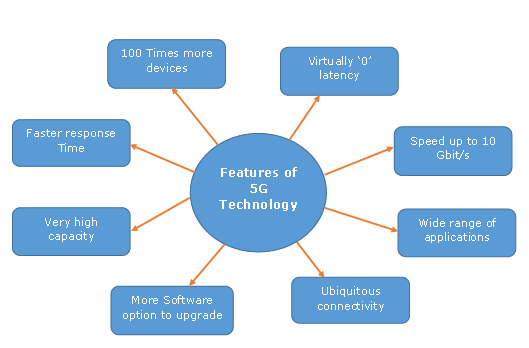
The fifth-generation mobile network is the forthcoming revolution of mobile technology. The features and its usability are much beyond the expectation of a normal human being. With its ultra-high speed, it is potential enough to change the meaning of a cell phone usability. With a huge array of innovative features:
Source
5th generation technology offers a wide range of features, which are beneficial for all group of people including, students, professionals (doctors, engineers, teachers, governing bodies, administrative bodies, etc.) and even for a common man.
Best 5G phones in 2021:
Samsung Galaxy S21 Ultra
Samsung Galaxy S21 Ultra tops our list of the best smartphones. The design impresses too, with a stylish matte glass back and an edge-to-edge display. The Samsung Galaxy S21 Ultra also has a big battery, so you can make use of 5G for longer.
One Plus 8 Pro
The first OnePlus phone to support wireless charging, as well as the first to have a real water resistance rating. You could in fact say that it’s the first to have no real compromises.
Motorola One 5G
Motorola One 5G is a big phone with a 6.7-inch display and a side-mounted fingerprint sensor, and its processor, handset is the best affordable 5G phone you can pick up, if you are looking for a 5G phone without a high price, you should start here.
Oppo Find X2 Lite
If you’re looking for a 5G phone that’s stylish and affordable, the Oppo Find X2 Lite is for you, as it looks great and has a display that matches. The only problem with most Oppo phones, this isn’t available in all countries, including the US.
Lenovo Legion Phone Duel
The Lenovo Legion Phone Duel is a powerful 5G phone for gaming, with a top processor, plenty of RAM, side triggers and a dedicated gaming mode. So if you’re a mobile gamer it’s a great choice.
Nubia Red Magic 5G
The Nubia Red Magic 5G has a long-lasting battery with fast charging capabilities. You won’t be able to pick up the Red Magic 5G in all regions. It is one of the best 5G phones in 2021.
iPhone 12 Pro Max
The iPhone 12 Pro Max has been winning awards for its display, so it’s no wonder it makes its way onto our 5G phone list in the ‘screen’ category. The phone also has better battery life than its predecessors, so watching TV during your commute to work won’t stop you being able to stream on the way back.
Want to check whether 5G is safe? Read this article.
Key Benefits of 5G
Pinnacle 5G velocities are required to be up to 100x quicker than the speed of 4G LTE organizations. Diminished idleness will uphold new applications that influence the force of 5G, the Internet of Things (IoT), and man-made reasoning.
Expanded limit on 5G organizations can limit the effect of burden spikes, similar to those that occur during games and news occasions.
- You can handle your PCs by handsets.
- Schooling will get simpler − An understudy sitting in any piece of world can go to the class.
- Clinical Treatment will get simpler and economical − A specialist can treat the patient situated in distant piece of the world.
Conclusion
5G latency will be faster than human visual processing, making it possible to control devices remotely in near-real time. Consider these best 5G phones to buy this year.

by Anika D | Mar 9, 2021 | 5G, Business
Day by day, the popularity of 5G is increasing in consumers and businesses. Amid the current pandemic, 5G network roll-out has continued.
Source
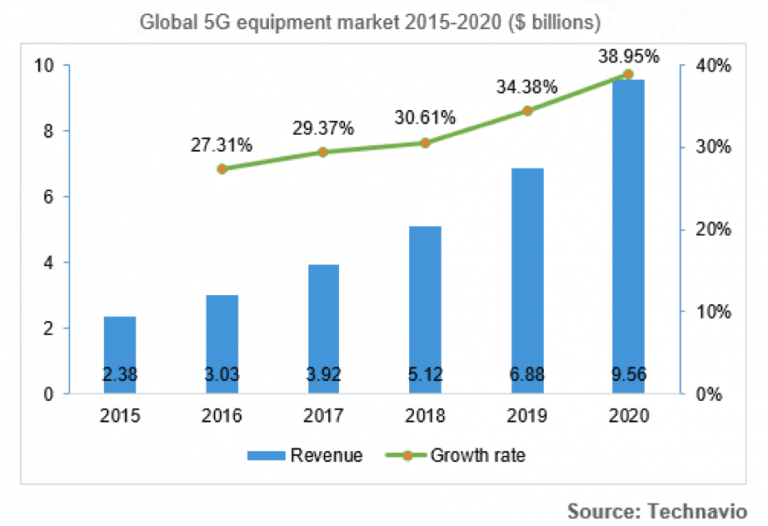
As more and more companies are investing in this technology, 5G stocks are likely to be market performers. If you want to invest in 5G technology, check out the list of the top four best 5G stocks to buy in 2021.
Qualcomm
Qualcomm is a company that is a warehouse of patents on wireless communications. It may be going to win the 5G race in 2021. Qualcomm is truly an incredible company, and anytime any smartphone gets sold in any part of the world, it collects a few bucks.
Qualcomm’s latest quarterly non-GAAP revenue increased about 35%. Also, according to Qualcomm guidance for the first quarter of 2021, the company believes that its diluted value will reach about $1.95 to $2.15 per share.
It is assumed that 12-month growth of 76%, QCOM 5G stocks may play a good role in 2021.
Apple
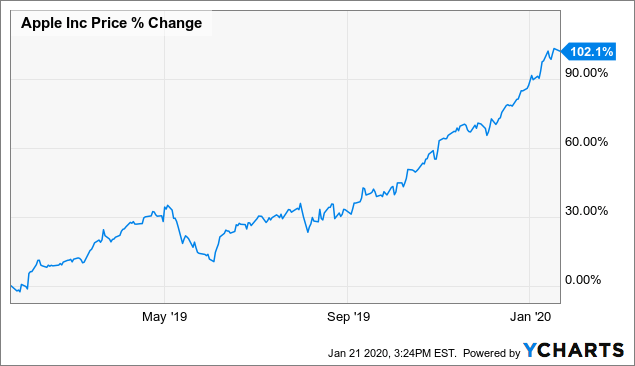
Apple is another big company that is in the race of 5G. In the pandemic year, the company passes more than $100 billion in earnings in the quarter. The expected revenue of it may increase this year with high percent as compared to last years.
Source
Further, it is assumed that the 5G iPhone series would make a big profit in 2021. So, Apple is a good choice to invest in 5G stocks of the company.
Ericsson
Ericsson is again a great player of 5G. This Swedish telecommunication company has a strong consumer base and infrastructure as well.
Every time when a company sells a 5G smartphone, Ericsson gets about $5 in royalties. It is assumed that by 2025, the 5G smartphone royalties of Ericsson will reach about $20 billion globally.
Further, it is among the top three companies in the world for 5G deployments. So, in 2021 also, it will put more effort in 5G and gain more revenue as well. So, you can invest in its 5G stocks too.
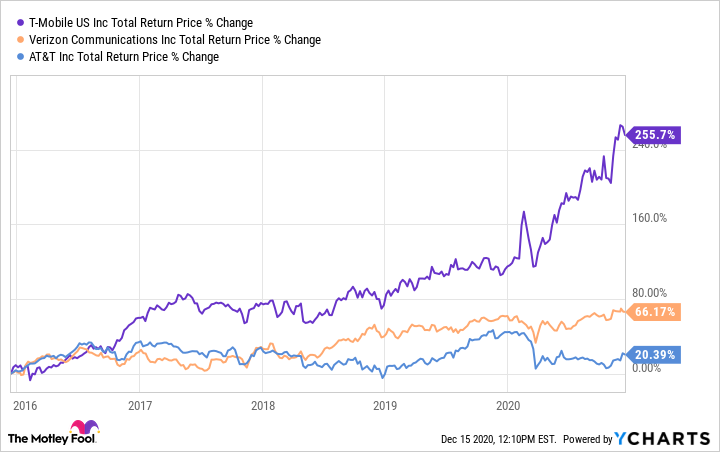
Verizon Communications
Verizon is a provider of telecommunications and has upgraded its network to 5G for fast speed. In this year, the company is expecting a profitable revenue through its 5G infrastructure.
Source
It is the largest wireless network provider in America and boasts a market share of about 35%. The stock of the company holds good potential for future 5G growth as well.
You can invest in the 5G stocks of Verizon too in 2021.
Analog Devices
Analog Devices is an analog semiconductor company that produces high-speed analog signal processing chips. According to some statements, Analog can dominate the 5G radio signal technology with about 70% market share.
5G technology is in demand, and this is the reason why Analog is also focusing on the 5G radio signals to meet the requirements of customers. So, this year you can expect big growth in the Analog market.
Also, its 5G stock share may go up, and best to invest in 2021.
Final Words
5G is evolving technology, and almost every telecommunication company is working on it. There are companies that already have jumped into 5G, and their stock is expected to increase in 2021 too. So, invest wisely in 5G stock for the 2021 year.

by Anika D | Mar 6, 2021 | 5G
The three largest cable operators in the USA – Cox, Comcast, and Charter – won the 5G race by bidding over $1 billion for the mid-band spectrum. The spectrum is ideal for next-generation wireless technology.
The Citizens Broadband Radio Service (CBRS) licenses are valid for ten years. It is available with 40MHz in the country that is enough to cover large, urban areas. Now, cable operators can now deliver services like fixed wireless access, mobile consumer services, and managed private networks (MPNs) for organizations.
Because the services work both outdoors and indoors, enterprises may wish to use them to connect their Internet of Things (IoT) devices. They may even use it to replace or supplement Wi-Fi in addition to IoT connectivity. Service providers, meanwhile, will most likely use CBRS to deliver FWA services and as a replacement for last-mile fiber access and consumer mobile service to offload their traffic from their Mobile Virtual Network Operator (MVNO) partner.
The service is available both indoors and outdoors, making enterprises use it for IoT device connectivity. Service providers may use CBRS to deliver FWA services. They may also consider this a replacement for fiber access and offload traffic from Mobile Virtual Network Operator (MVNO) partners.

Cable Operators and CBRS
For cable operators to win with CBRS, cable operators have to move towards 5G wireless spectrum. They have to decide the distribution level of their network.
Cable operators should think about deploying the new technology with their expansion. They need to modernize networks so that they can benefit from new service opportunities. By unlocking themselves from between compute and radio, cable operators can increase their compute investment.
In addition, cable operators are paving their way into the mobile business. So, they should analyze the associated pressure to gain profits from this new venture. For instance, Comcast’s offering can break even by the end of 2021 with almost 3.5 million service lines. Using oRAN can help realize this while saving Capital Expenditures (CapEx) while keeping these costs off the books.
How this Affects 5G Wireless Spectrum Development?
CBRS spectrum may cover 80% of cable customers in America. This could mean a significantly large amount of money for the MSOs if they utilize this appropriately. So, the FCC refers to this as the “5G spectrum” that makes big cable companies highly competitive in the 5G race.
The competition mainly comes from the ability to deliver personalized solutions to customers. As cable operators add new capabilities to their network, they must start with the 5G adoption and modernization of their devices.
Now that cable operators can buy the spectrum licenses and provide 5G services to companies as a managed service. What’s more, they can even pair it with Wi-Fi 6 to cover a wide range of applications.
By working in collaboration with service providers, it is possible to bring the best 5G-driven ecosystem for both enterprises and individual consumers. With all this, cable operators can prioritize their areas with a higher take rate for the services. As a result, they can adjust as required.

by Anika D | Mar 3, 2021 | 5G, Emerging Technology, Industrial IoT
The decision to choose the right wireless technology in industrial facilities should be a strategic choice. With the right choice, you can improve safety, ensure compliance and optimize your plant.
Check out the questions to consider making this decision easily:
Are you prepared for the wireless technology?
- Could you equip field workers with wireless handheld devices for server interactivity and access to data?
- Are you planning to manage single or multiple wireless security system?
- How many devices do you expect the wireless network to handle at present and in the future?
- How many applications will require the wireless data?
Imagine the Potential
The latest wireless technologies are known for ultra-fast speeds and minimal to zero latency. Furthermore, it goes well in terms of data streaming from a device to enabling industrial IoT networks to implement a high density of connected devices.
Considering all that, it’s no wonder so many industrial customers are looking towards Wi-Fi 6 and/or 5G. Companies are rapidly adopting wireless technologies for basic monitoring to data acquisition and supervisory control. Also, in comparison with conventional cable-based circuits, the latest generation of wireless technology provides better flexibility, cost savings, and easy installation.

Furthermore, the possibilities of the next-generation wireless technology are endless. Imagine lower installation costs and real-time data! In addition, expect a reliable and secure network that fits multiple wireless-enabled applications that:
- Keep people and the environment safe: A real-time location system to ensure safe operations, and safety shower monitoring. In addition, you enjoy benefits like emergency-responsive infrastructure, and wireless leak detection.
- Improve the reliability of plant: Continuous wireless monitoring of field equipment, equipment health management visualization, automated field operator, etc.
- Efficient employees and processes: Input/output sensors for real measurements monitoring and continuous wireless corrosion detection. Further, it helps with upgrading tank instrumentation.
- Comply with environmental and industrial standards: Emissions monitoring, leak detection as well as repair support.
Security
Security is paramount to protect your infrastructure against malicious, your intellectual property, and your people.
- What security level do you need?
- Do you need a single or multiple security systems?
In addition, these security considerations are important for a strategic deployment of the wireless network within your industrial facility. Moreover, this gives you the opportunity to use the wireless technology safely, today and in the future. Fortunately, you can achieve openness and security with 5G.
Spectrum
Consider your needs in terms of the network spectrum.
- Where will you implement the solution?
- What are the associated regulations in your country?
- Does the technology need any particular procedures that fail to meet with unlicensed spectrum?
- Would you need to pay for private spectrum?
- Can you leverage the spectrum and services provided by a mobile carrier?
In addition, there are many other aspects you must consider before deploying the industrial wireless technology within your facility. So, when you consider all aspects discussed above, you can make a strategically informed decision for your infrastructure.
Hopefully, you are now able to choose an efficient and reliable wireless technology for your infrastructure.
