by Anika D | May 14, 2021 | Data Science
Why do think data science jobs have increased by 50% in the USA. Well, this century is all about freelance data scientists. The company that has the maximum data, is eventually a market leader.
This has called out for all data scientists out there. Data scientists are the no. 1 most promising job in America for 2021.
You will be surprised to know that remote data scientists jobs have a median base salary of $130,000. The job openings have increased by 56% as compared to the last year.
Pandemic and Data Scientists
Data scientists have helped businesses intensely improve the efficiency of processes and operations to meet shifting online workforce needs with the help of big data, cloud computing, machine learning, and more advanced Artificial Intelligence (AI) applications.
Amplified demand has allowed data scientists the chance to drive huge advances in client data management, Robotic Process Automation (RPA), cybersecurity, finance, healthcare, manufacturing, logistical supply chain AI, retail, workplace communication, and e-commerce.
These fields will certainly endure needing data science talent in 2021 and beyond. The data scientists will help the firms upsurge their capacity for big data. This way they can make sense of newly digitized business models and digital revenue openings. With even knowledge-based jobs like lawyers and accountants being automated, will Data Scientists appear to be an exception.
Want to be a freelance data scientist?
With every day rising data science jobs, it is no wonder data science was named “sexiest job of the 21st century” by Harvard Business Review. Certainly, it will evolve with the ever-changing needs of the digital landscape. The field of data science aims to power its reputation for years to come.
Talented and enthusiastic data-savvy statisticians, can work remotely or as freelancers and expect a lucrative career.

by Anika D | Apr 1, 2021 | General
For the discipline of the enterprise, data science is the antithesis of Artificial Intelligence. By availing the whole spectrum of data at their disposal, businesses can discover data science boundaries to master in data preparation.
With the diversity in data requirements and problems, comes an extensive choice of innovative solutions. These solutions often bring a host of data science trends with themselves.
It grants the agility to the organizations that they need to offer deep insights into their data. In this guide, you will get a glimpse of data science trends in 2021.
Hybrid Cloud
In order to manage the team’s demand for better agility and near real-time response, cloud tech, as well as edge computing, is essential. Cloud engineers can deploy AI models to incorporate IT systems to exploit capabilities and focus on cost optimization.
More Applications Draft With Python
Python is an all-rounder language program in the world of “Data Science” or “Data Analysis”. This is because it consists of enormous free data science libraries, including machine learning libraries. You can also use it to develop blockchain applications to improve the economy.
Increase In Demand For End-To-End AI Solutions
It helps venture customers to set and builds machine learning models to set large data. In this way, organizations can expand their valuable and deep learning insights from their huge amounts of data. Further, it automates imperative data management tasks.
Hence, businesses are in need to have an end-to-end data science solution for growth perspective.
Corporations Hiring More Data Analysts
The need for data analysts is continuously increasing over the last five years. Mostly this requirement of a data analyst is coming from the Internet of Things as well as progress in cloud computing.
The global data storage is about to grow from 45 zettabytes to 175 zettabytes by 2025.
Data Scientists Joins Kaggle
Kaggle is becoming popular and increasing to become one of the significant data science communities. With more than five million users, it is still expanding its scope.
To commence the machine learning journey, many potential data scientists are now starting it with Kaggle. With this now, scientists can even allocate data sets to solve data science confrontations with neural networks.
Increased Interest In Consumer Data Protection
Consumer consciousness about their data privacy is also increasing. According to a survey, more than half of all customers are now paying more attention to data privacy.
Platforms like Google, and Facebook that previously collect and share user data liberally, now face both public scrutiny as well as legal backlash.
And when it comes to the future attainment and use of consumer data, this might become a bane for data science.
Augmented Analytics
It refers to constrain some superior insights from the facts in hand by eliminating any erroneous conclusions. By infusing augmented analytics, machine learning, and artificial intelligence, scientists can plan a new model. Hence, it holds a strong position for better decisions that are free from errors.
Conclusion
As organizations start to grow in every aspect of their business, they produce more data. And “Data Science” can help them to evaluate their areas of improvement to deliver their maximum efficiency.

by Anika D | Feb 26, 2021 | General
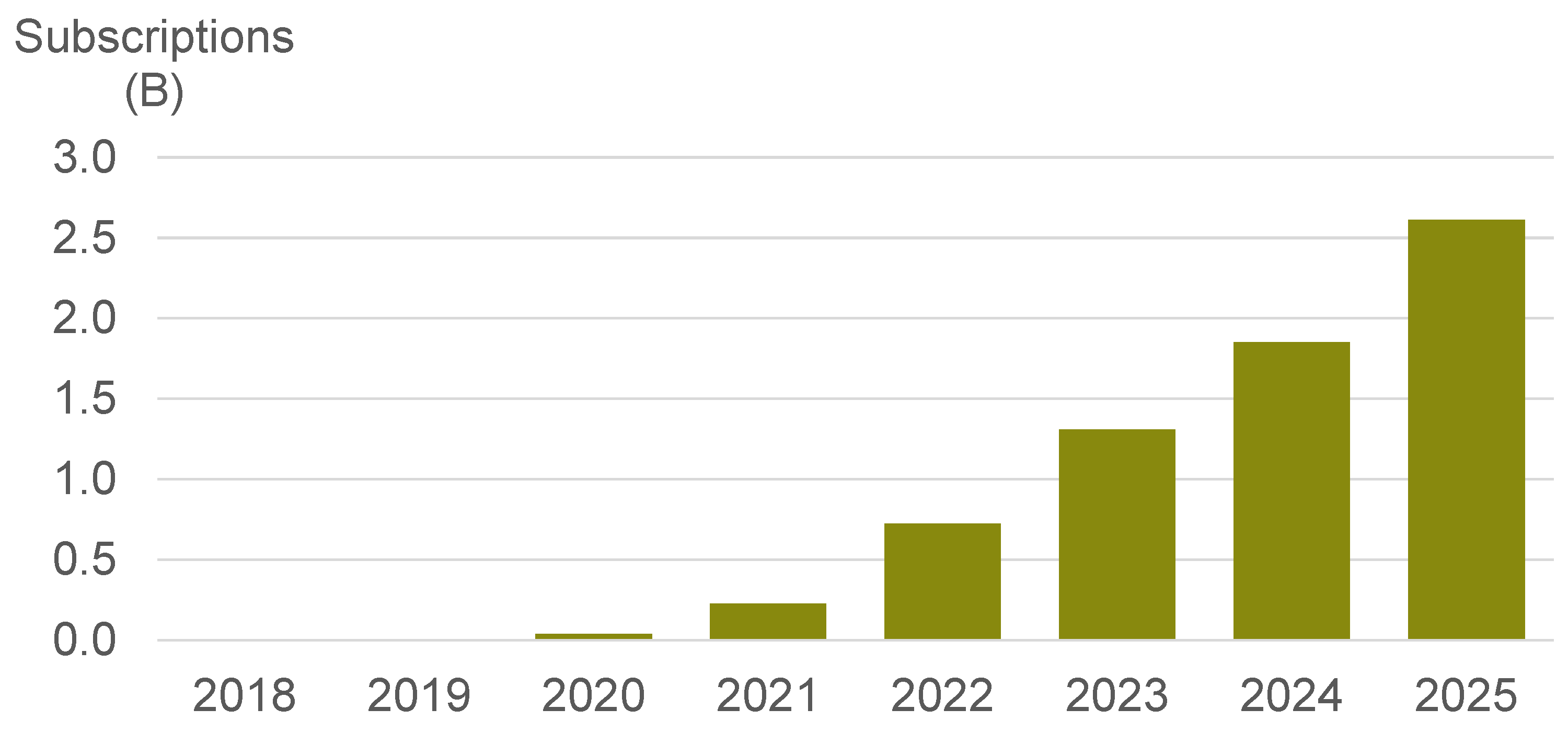
The once a dream technology, 5G is not a future technology anymore. The technology is really here and many telecom companies and phone manufacturers have already started to work with it. Stats on Statista says that 5G subscription will increase to more than 2.7 billion by 2025.
Source
But, since the new networking system uses OpenNESS, there’s a lot of doubts about its security features.
So, what exactly is 5G’s OpenNess and how is it going to affect its security? Moreover, will it work in favor of security standards or not? Let’s find out.
Read out surprising facts about 5G.
What is Openness?
The openNess or the Open Network Edge Services Software is an advanced toolkit developed to take advantage of the Network Function Virtualization on 5g. The toolkit enables the high-end platforms to on-board the network and actively manage applications on it.
The main motive of the technology is to enable open collaboration and innovation on the new 5G networking. This architecture eliminates the complexity of the Cloud and IoT technology. It’s also helpful for migrating applications from Cloud to Edge services.
It’s also an excellent technology for data science and automation firms. Its distribution and open architecture make it easy to analyze/manage data and evaluate anomalies in it.
Why Openness?
The earlier version of networking including the 3G and 4G technology came with restricted access. It means that the operators here have to stick with the close ecosystem of the vendors. It was really hard to integrate products or services once the vendor was selected. Not to mention the extra cost of these changes. The limitation simply restricted innovation.
The use of OpenNESS in 5G removes this barrier. It lets the operators mix and match technologies and equipment as per their needs. The networking technology even lets you use a commercial off-selves server with modular software.
Security of 5G with Openness
While the Open architecture 5G seems like a risk, it’s not. In fact, the technology works in favor of network security and enhances it in multiple ways. The following are security benefits you can expect.
Transparency
Opening the 5G technology ensures that every user gets full transparency over the network. It also helps to retain full control of the network. Moreover, the tech provides an adaptive environment that will adjust to changing cloud security trends. It’s also easy to integrate tools and architectures into networking technology. Thus, you get easy monitoring, mitigation, and threat management.
Auditing Capabilities
The 5G technology moves ahead of the traditional monolithic approach. Here you have collections microservices instead of large network functions. It enables the operator to audit transactions. The microservices-based technology also simplifies network monitoring. Even a small data breach attempt will not go unobserved with it.
Risk Reduction
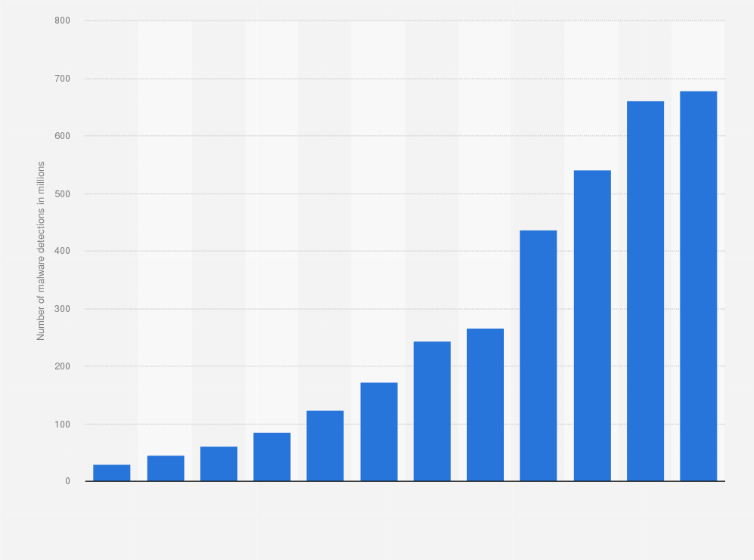
The technology and networking trends never remain constant. There are always additions of new applications, malware, tools, and more that get added every now and then. Stats says that more than 700 million specimens of malware were added within 2020. The numbers are increasing and so is the risk that comes with it. The capability to integrate small changes and continuously upgrading can help with it. It ensures that the tech gets patches and upgraded to help in risk prevention.
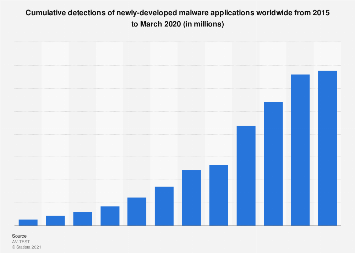
Source
Trustability
The biggest benefit of OpenNESS in 5G is that you don’t have to stick with shady vendors. If you find it difficult to trust them, you can swap-out any time. There is no lock-in to restrict your freedom.
Silicon Root Of Trust
Not every function on 5G is open. The tech comes with a smart feature called the Silicon Root of Trust that acts as a protective layer for critical functions. The technology ensures that every server checks itself before restart. It will compare the data with the default configuration and notify if there’s any diversion. It comes in really handy to detect potential data breaches and hacking attempts.
Final Words
OpenNESS is a sophisticated technology that enhances the flexibility and transparency of the network. It’s not a risk to security. So, yes it’s possible to achieve both OpenNESS and Security in 5G World.

by Anika D | Feb 24, 2021 | Cybersecurity, Data Science
While many sectors including manufacturing are using AI and modern technologies, many healthcare facilities are still unsure. Mostly because the large data collection makes them easy targets and the past records.
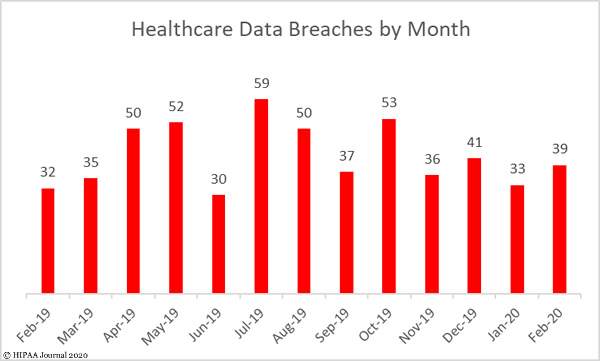
For instance, February of 2020 alone marked 39 data breach cases in healthcare. More than 1531,855 records got exposed.

Source
So the government has strict codes for the healthcare sector. They have to follow it to avoid legal conflicts and ensure users’ security.
Here’s a little detail about the risk this sector faces and the tricks it’s following to prevent the breaches.
Risks
There are multiple risk possibilities in using high-end and automated technologies including cloud storage in healthcare. The most common of them is the data breach risks.
Since the system connects with the internet and uses it to store, manage and access the data, it’s vulnerable to cybercrimes. If anyone gets access to the data, they will have access to every confidential detail of the patients. It can also compromise data about the finances of the firm.
Another risk in this sector is an indirect or direct release of details. While it’s a rare scenario. There are cases where a private organization sold/released their user data.
Cracking Data Privacy Code
The data privacy code states that any personal data that a person including a staff member shares with healthcare is confidential. The healthcare center and anyone connected with it has to ensure its safety.
The following are some tricks and measures that the healthcare sector is currently using for this part.
Secure Access
Every system connected with healthcare needs a proper credential to access the information. Some facilities also use dual check and timed login features for this part. The online database also used firewalls and sometimes data science firms to detect system anomalies.
Encryption
Converting the data into a different form is common for most websites. The healthcare facilities assign a cipher key to every entry and save it as a hex code. This way, even if someone gets the hacks, all they see will be codes. The cipher key further ensures that the methods like brute force or guessing don’t work.
Sophisticated Security Checks
Even with precautions, there are always possibilities of hacks and patches. So, healthcare facilities often interact with data science and automation firms to introduce analytical applications in their system. These systems help use the network data and past data to predict unwanted activities on it. The data is helpful in finding system weaknesses and fixing them.
Controlled Third-Party Access
The healthcare centers get regular visits from a number of people, including general visitors, patients, maintenance workers, and vendors. Many like the maintenance worker may even need to use a computer at the center. So, it’s a common policy to lock the patient information.
Proper Disposal of Devices
The IOT based medical devices store data about their users and sometimes the staff member associated with them. Throwing it without wiping is a big risk, even if it’s broken or non-functional. Mostly, the healthcare centers have specified disposal for them. They are locked out of reach and then destroyed or wiped to extend that no one can recover data from them.
System Misuse
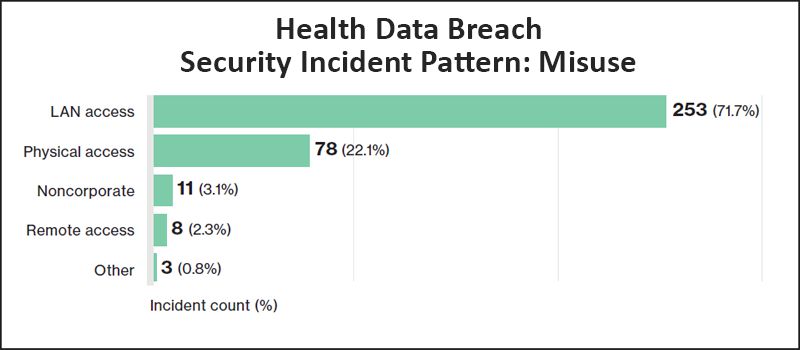
One of the most common causes of data breaches in Healthcare is system misuse. 71.7% times it’s the LAN accessed system that causes the data breach. Training staff members and restricting the use of any external storage device is one way to prevent this issue. Restricting non-trusty websites and monitoring systems is also effective.

Source
Final Words
Data privacy code is essential to ensure that everyone associated with the healthcare sector gets security. The hospitals are taking strict measures to ensure their compliance with these codes. This combined with other technologies like 5G is sure to revolutionize the industry.

by Anika D | Feb 11, 2021 | 5G, Emerging Technology
Is 5G safe? As the next-generation wireless networking technology is surfacing for real-world use, this question has become quite common.
The newest network technology – 5G – is gaining popularity around the world due to its high speed and low latency.
Though the world seems excited about this, the use of ultra-high-frequency radio airwaves gives rise to health-related concerns.
The telecommunication experts summarize many scientists who have studied the effects of mobile radiation on this wireless technology.
These studies and claims have resulted in a debate –
Whether 5G is safe or not?
To find the answer, let’s keep reading:
5G Produces Radiations at Safe Levels
As per the international body in charge that sets the limit on exposure to radiation says, 5G is safe to use.
It generates radiation, but with safe intensity. 5G base stations as well as phones, and the frequency in which 5G operates, are likely to operate well within safe parameters.
The radiation within these parameters is not likely to increase the risk of cancer. Moreover, it will not make the immune system of humans and animals weak.
Uses Low-Frequency Bands

Source
The 5G network uses low-frequency bands as per the health safety concerns. The level of the frequency bands also differs in different areas as per the requirement of the users.
The frequency bands are divided into two groups: The first band is 3GPP that is from 410 MHz to 7125 MHz, and it is also known as the sub-6 GHz band.
The second band is from 30 GHz to 100 GHz approximately. The aim of this band is to have easy support for high-speed and more data transmissions safely.
Want to know how fast is 5G? Click here.
As per the safety concern, 5G is expected to use the same frequency bands that are used in the previous generations of wireless in the US. It includes low-band 600MHz frequencies and mid-band spectrum in the 2.5GHz, 3.5GHz, and 3.7GHz-4.2GHz bands.
The focus of the telecommunication experts is to execute the Ultra-Reliable Low Latency Communication (URLLC) for the 5G services. In addition, the NSA mode of 5G depends on the control plan of existing 4G networks that do not have major impacts on the health.
Low Power, Low Risk
The radiofrequency radiation that 5G networks create is completely controlled and poses no virtual risk to the consumers.
On an average the transmitter power levels for the previous G generation is more powerful as compared to the 5G networks.
Thus, 5G has few potential health impacts as compared to the earlier mobile phone generations. This power is measured in terms of watts, and a single watt is only a minute quantity of energy.
The power transmitted by the 5G mobile phones can reach up to two watts, which does not have any impact on health.
The best part is that all the 5G base stations can also put on sleep mode if there are no active users (for example, at the night time).
5G uses Beamforming Technique
5G technology uses a beamforming approach for the health safety of the users. Under this technique, it directs a narrow radio waves beam directly to the device of the users.
This method not only offers a high connection speed, but also allows having low radio wave exposure as compared to the previous network generations. Thus, it will not have a major impact on the health of the people.
What Scientist Say About 5G
Scientists say that you do not have to worry about 5G as it does not have any major impact on your health.
They say that you are exposed to radiation from all around as it comes from space to soil and from water to food.
There are already so many natural and human-made radio waves, and 5G is just at its starting. A professor of bioengineering at the University of Pennsylvania says that there is no link between the 5G radiation and health hazards.