
by Anika D | Jun 10, 2021 | Emerging Technology, Industrial IoT
Internet-connected devices are flourishing in recent years as people and businesses are using smart devices for their convenience. When the “Internet of Things” gets connected to your body, the outcome is the “Internet of Bodies.”
Basically, the IoB is an addition to IoT and connects your body to a network with the help of devices. You can implant, ingest, or connect such devices to your body in some way.
When such a device connects to your body, it helps to exchange the data. Further, you can also monitor and control both the device as well as the body with it.
Latest Examples of Internet of Bodies
The examples given below will help you learn more about the internet of bodies. All these devices play a vital role in the technology innovations in the logistic industry.
Implantable Cardiac Devices
Implantable cardioverter-defibrillators and cardiac pacemakers give real-time as well as incessant information about your cardiac fluctuations. In addition, they also regulate heart rates if your hearts beat too slow or too fast.
The best part is that these devices help in treating heart failure as well. If you want to use such devices, then implant them in the chest. Then the transmitter, which is located in your home, wirelessly transfers the recorded information to your physician.
Productivity Technology

In order to record and track the workers’ locations, Amazon has patented a technology for a wristband. If it senses a pause in productivity then it will vibrate to make employees focus on their work.
Health Trackers
IoB watches, bracelets, smartphone apps, and rings help to track heart rate, steps, and sleep patterns. Some devices also offer user-friendly information that offers greater visibility in individuals’ own health.
Such devices help individuals to make out and look for care regarding their health issues. Moreover, they persuade for better preventative health measures, including exercises and a healthy diet.
Direct-to-Consumer Genetic Testing
The genetic testing kits offer ancestry information as well as insights on disease and health risks. For these tests, you have to provide a sample of blood or saliva to the attendant. Then they will examine the sample for genetic variations.
Emotional Sensors
Artificial intelligence (AI) software firms are making systems that help to collect data on human emotions. These devices will analyze your voice intonations, facial expressions, and other audio as well as visual signals.
Future of the Internet of Bodies
As people are becoming more conscious about their well-being, therefore IOB technology plays a vital role in an individual’s health. It is really important to take every possible step for the development and advancement of these devices. IoB developers have to perform multiple researches and spread information about the pragmatic as well as real benefits of it.
Final Words
IOB is one of the essential elements for maintaining a balance regarding your health. It plays a vital role in daily life as it displays a high level of important information about your body. So you must learn all about the latest devices of IOB.

by Anika D | Apr 23, 2021 | 5G, Industrial IoT
The advancement in the Internet of Things (IoT) and 5G are changing the way organizations tackle some serious issues like climate change. And, smart buildings are one of the major innovations these days.
With rising temperatures and other environmental impacts, signs of climate change are on the rise. It is assumed that the world’s population also soar from 7.6 billion to 9.8 billion by 2050. Currently, construction and buildings account for 36% of global energy use and are responsible for 39 %of energy-related carbon dioxide emissions.
Source
So, for fast-paced urbanization, smart cities are the solution that can lower energy consumption and reduce climate impacts.
How can smart buildings help the environment?
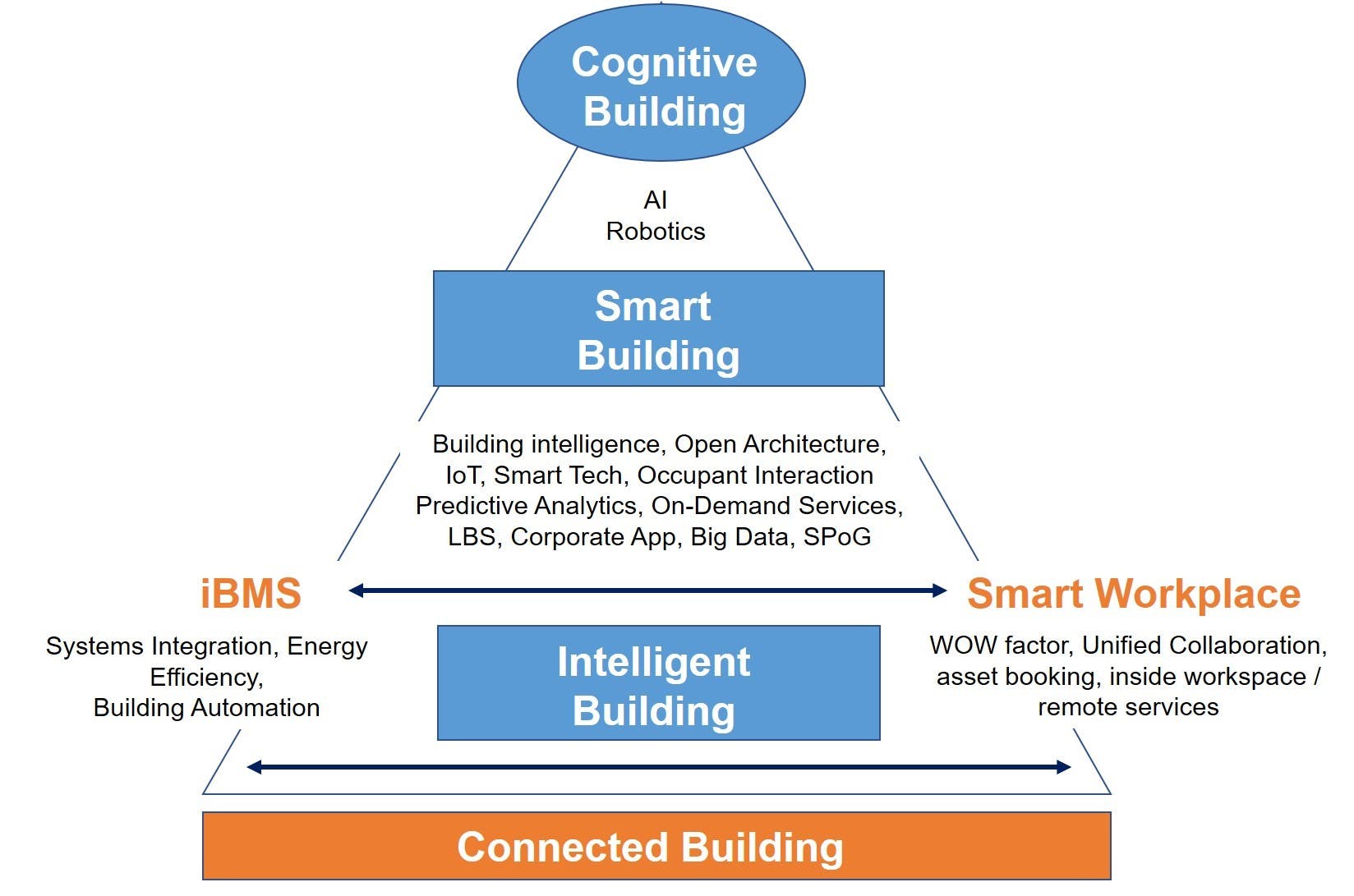
Connected buildings use the latest technology and IoT to control activities on the premises. Also, these buildings will be the bedrock of 5G and next-generation smart cities. They provide both environmental benefits with Net Zero CO₂ emission and help save money on things like heating and power.
Further, the latest building technology can manage lighting, heating, and cooling, reducing unnecessary use of energy. In addition, smart infrastructure technology can schedule preventive maintenance, automatically identify the potential hazard, and continually optimize buildings for energy efficiency.
Buildings such as office complexes, multifamily housing, hospitals, schools, and more area big part of city infrastructure. And, making them smarter can lower the energy consumption and carbon footprint of a city as well.
By connecting various buildings with an IoT network, air pollution can reduce many times and benefits the environment too. In addition to reducing carbon footprints, smart connected buildings also help improve productivity and save you a lot of money on utility bills.
Smart building is the future.
With the use of sensors and latest technology, smart infrastructure is the future and offer many benefits too. Also, connected smart buildings help create a smart city and benefits environment as well as occupants.

by Anika D | Apr 9, 2021 | Cybersecurity, Industrial IoT
Unauthorized attempt which could expose your personal data defines cyber-attack. It could include installing spyware or phone tapping without your permission. With the increase in cyber-crimes, we witnessed some major cyber-attacks in 2020.
Common Cyber Attacks In 2020
SolarWinds
SolarWinds was one of the most talked cyber-attack. Eminent companies like Microsoft etc. were also affected by it. The server that gives access to updates of SolarWinds was compromised and thus attacked. This code allowed information modification.
Twitter
Apart from this Twitter was also in the news lately. It was observed that fraudulent information regarding bitcoin was posted. The user apparently asked the twitter account holders for Bitcoin and through this received more than $100,000. Bill Gates, Elon Musk, Kanye West etc. were some of the famous personalities that were targeted.
Marriott
You think your data is safe with hotels? Well data of almost 5.2 million guests of Marriott were accessed. Marriott is one of the most eminent hotels throughout the world. The information included the name, birth date, phone number, address etc.
Zoom
Zoom was another such application that was attacked by hackers. Government also released the statement that zoom was not safe to use. Also, zoom codes were not so hard to crack so anyone could join in the meeting and get access to all the confidential data of the company. However, zoom has now hired an intelligence firm to look over the safety.
Greek Banking System
All of us have heard about the Greek Banking System. A Greek travel site was hacked due to which a lot of debit and credit cards were cancelled by the 4 main banks of Greece due to security protocols. A few customers were also charged with undesirable transactions. This website was a travel website and was used to book tickets etc.
MGM
MGM was another travel related incident that was exposed to cyber-crime. Personal data of around 10.6 million guests was at risk. MGM resort is a global entertainment company accompanied by resorts and casinos. Information of Famous personalities like Justin Bieber, Jeff Bezos was also at risk.
Finastra, was also attacked by a ransomware in which it was temporarily disconnected and thus affected servers from the internet. Though there is no evidence that the data of the employees were exfiltrated it did disrupt the operations.
Let’s Take a Look At The Statistics
Today, cybercrime has affected more than 50% of businesses. Human errors are responsible for 95% of it. It is a shame but only 5% of company’s folders are the ones which are properly protected. There were 11,762 cases Between January 1, 2005, and May 31, 2020
It is seen that in the first half of 2019, attacks on IoT devices have tripled. A whopping amount of $3.92 million has cost enterprises due to data breaches. Due to COVID, cybercrime has increased up to 600%.
To conclude we can say that cyber-crime is a punishable offence. There are several laws against it. By being a little more attentive we can help in stopping the spread of cyber-crime. Cyber-crime violates basic human laws too. It is time, let us take a stand against it.

by Anika D | Mar 6, 2021 | 5G
The three largest cable operators in the USA – Cox, Comcast, and Charter – won the 5G race by bidding over $1 billion for the mid-band spectrum. The spectrum is ideal for next-generation wireless technology.
The Citizens Broadband Radio Service (CBRS) licenses are valid for ten years. It is available with 40MHz in the country that is enough to cover large, urban areas. Now, cable operators can now deliver services like fixed wireless access, mobile consumer services, and managed private networks (MPNs) for organizations.
Because the services work both outdoors and indoors, enterprises may wish to use them to connect their Internet of Things (IoT) devices. They may even use it to replace or supplement Wi-Fi in addition to IoT connectivity. Service providers, meanwhile, will most likely use CBRS to deliver FWA services and as a replacement for last-mile fiber access and consumer mobile service to offload their traffic from their Mobile Virtual Network Operator (MVNO) partner.
The service is available both indoors and outdoors, making enterprises use it for IoT device connectivity. Service providers may use CBRS to deliver FWA services. They may also consider this a replacement for fiber access and offload traffic from Mobile Virtual Network Operator (MVNO) partners.

Cable Operators and CBRS
For cable operators to win with CBRS, cable operators have to move towards 5G wireless spectrum. They have to decide the distribution level of their network.
Cable operators should think about deploying the new technology with their expansion. They need to modernize networks so that they can benefit from new service opportunities. By unlocking themselves from between compute and radio, cable operators can increase their compute investment.
In addition, cable operators are paving their way into the mobile business. So, they should analyze the associated pressure to gain profits from this new venture. For instance, Comcast’s offering can break even by the end of 2021 with almost 3.5 million service lines. Using oRAN can help realize this while saving Capital Expenditures (CapEx) while keeping these costs off the books.
How this Affects 5G Wireless Spectrum Development?
CBRS spectrum may cover 80% of cable customers in America. This could mean a significantly large amount of money for the MSOs if they utilize this appropriately. So, the FCC refers to this as the “5G spectrum” that makes big cable companies highly competitive in the 5G race.
The competition mainly comes from the ability to deliver personalized solutions to customers. As cable operators add new capabilities to their network, they must start with the 5G adoption and modernization of their devices.
Now that cable operators can buy the spectrum licenses and provide 5G services to companies as a managed service. What’s more, they can even pair it with Wi-Fi 6 to cover a wide range of applications.
By working in collaboration with service providers, it is possible to bring the best 5G-driven ecosystem for both enterprises and individual consumers. With all this, cable operators can prioritize their areas with a higher take rate for the services. As a result, they can adjust as required.

by Anika D | Mar 3, 2021 | 5G, Emerging Technology, Industrial IoT
The decision to choose the right wireless technology in industrial facilities should be a strategic choice. With the right choice, you can improve safety, ensure compliance and optimize your plant.
Check out the questions to consider making this decision easily:
Are you prepared for the wireless technology?
- Could you equip field workers with wireless handheld devices for server interactivity and access to data?
- Are you planning to manage single or multiple wireless security system?
- How many devices do you expect the wireless network to handle at present and in the future?
- How many applications will require the wireless data?
Imagine the Potential
The latest wireless technologies are known for ultra-fast speeds and minimal to zero latency. Furthermore, it goes well in terms of data streaming from a device to enabling industrial IoT networks to implement a high density of connected devices.
Considering all that, it’s no wonder so many industrial customers are looking towards Wi-Fi 6 and/or 5G. Companies are rapidly adopting wireless technologies for basic monitoring to data acquisition and supervisory control. Also, in comparison with conventional cable-based circuits, the latest generation of wireless technology provides better flexibility, cost savings, and easy installation.

Furthermore, the possibilities of the next-generation wireless technology are endless. Imagine lower installation costs and real-time data! In addition, expect a reliable and secure network that fits multiple wireless-enabled applications that:
- Keep people and the environment safe: A real-time location system to ensure safe operations, and safety shower monitoring. In addition, you enjoy benefits like emergency-responsive infrastructure, and wireless leak detection.
- Improve the reliability of plant: Continuous wireless monitoring of field equipment, equipment health management visualization, automated field operator, etc.
- Efficient employees and processes: Input/output sensors for real measurements monitoring and continuous wireless corrosion detection. Further, it helps with upgrading tank instrumentation.
- Comply with environmental and industrial standards: Emissions monitoring, leak detection as well as repair support.
Security
Security is paramount to protect your infrastructure against malicious, your intellectual property, and your people.
- What security level do you need?
- Do you need a single or multiple security systems?
In addition, these security considerations are important for a strategic deployment of the wireless network within your industrial facility. Moreover, this gives you the opportunity to use the wireless technology safely, today and in the future. Fortunately, you can achieve openness and security with 5G.
Spectrum
Consider your needs in terms of the network spectrum.
- Where will you implement the solution?
- What are the associated regulations in your country?
- Does the technology need any particular procedures that fail to meet with unlicensed spectrum?
- Would you need to pay for private spectrum?
- Can you leverage the spectrum and services provided by a mobile carrier?
In addition, there are many other aspects you must consider before deploying the industrial wireless technology within your facility. So, when you consider all aspects discussed above, you can make a strategically informed decision for your infrastructure.
Hopefully, you are now able to choose an efficient and reliable wireless technology for your infrastructure.
