by Anika D | Feb 12, 2021 | 5G
With a number of devices becoming part of the Internet of Things (IoT), a need for a powerful wireless Internet is imminent. This is where the fifth generation (5G) of wireless technology comes in handy. In this post, explore surprising facts about 5G.
The technology has started hitting the industry by the end of 2018 and will continue to expand worldwide.
Surprising Facts About 5G
With countries and network providers on the battlefield to prove their 5G technology, here are five surprising facts about 5G.
#1: 5G Subscription Will Reach Billions By 2024
Since 2019, the 5G network connectivity will roll out in selected markets. More customers will have the opportunity to upgrade to this new service in 2021 and beyond.
For the moment, most 5G connections are restricted to wireless technologies associated with home internet service, but a new generation of phones designed for 5G cellular service is already hitting the market.

Source
The 5G subscription will be around 1.9 billion worldwide by 2024.
#2: 5G Will Be 100 Times Faster Than 4G
There is no doubt that current 4G LTE network technologies are pretty fast. But 5G is expected to be 100 times faster than 4G, and it is believed that it delivers speeds of up to 2.5 GB/s.

Source
However, some companies promise to offer even higher speeds. With 5G, you can download the 3GB movie within a few seconds.
#3: 5G is Not Just for Phones
In addition to smartphones, 5G led to the invention of smart cars and smart cities with superb powerful features. You will see self-driving cars communicating with the world to pass through the traffic on the road.
Due to low latency and higher capacity of 5G, the smart cars can communicate with locality at quite a fast speed.
In addition to vehicles, 5G has huge implications on wearables, augmented reality games, virtual reality headsets, smart home appliances, PCs, etc.
Moreover, 5G will enable smartwatches to track GPS in real-time.
#4: It Cost You High than 4G
5G networks depend on a large number of smaller cell towers. Therefore, the network providers will need to make good investments in the infrastructure of 5G to add more towers.
According to Deloitte, the United States will need to invest about $130 to $150 billion in fiber optic cabling for 5G. So, the users also need to pay more for using the 5G network.
# 5 Companies Have Started Developing 5G Devices
Many big companies are currently working to develop 5G and to bring the technology in their future devices. The organizations like Samsung, Apple, Huawei, Intel, Ericsson, and Qualcomm are in the race of developing 5G.
Therefore, you can expect the fast 5G technology in your area in the years to come.
Want to know whether 5G is safe or not? Click here to know.
Final Words
5G is like the new wave of networks that promises to change your life for good. Unlike 4G, it is fast and quick. You can download a full HD movie just in seconds with this technology.
The facts about 5G shows that it is going to be a game-changer in the field of networks. Also, it fulfills the dream of smart cities around the world.

by Anika D | Feb 4, 2021 | Emerging Technology, Industrial IoT
Today, IoT (Internet of Things) technology is changing nearly all industries – from manufacturing to farming to healthcare. Numerous companies are already leveraging the power of IoT to drive business.
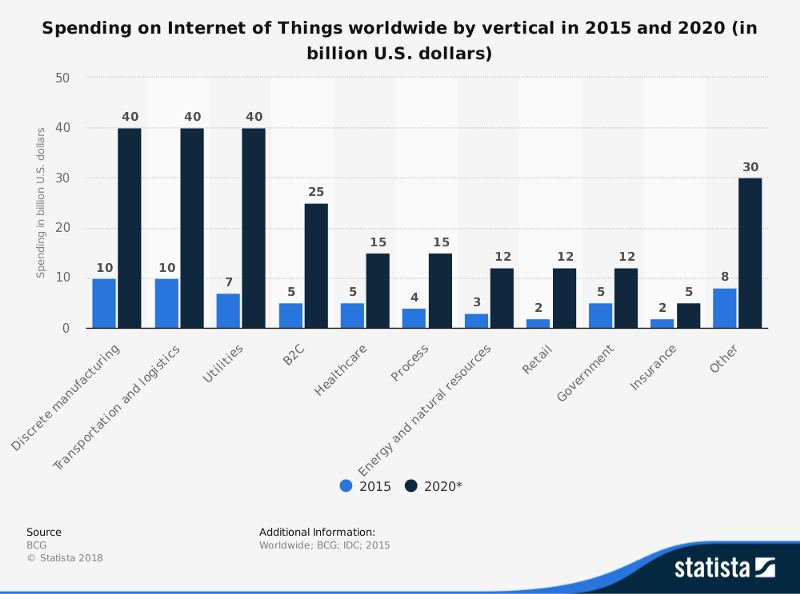
The stats show that spending on IoT has significantly increased in all sectors in 2020 as compared to that in 2015.
statista
IoT Examples
It would not be too long when we see IoT revolutionizing our day-to-day life. Below are some examples of IoT in our daily lives:
Healthcare
IoT in healthcare is one of the important sectors in the technological revolution we are benefitting from today.
Moreover, IoT enabled sensors and devices now offer healthcare providers important data they require for seamless working and improving patients’ lives.
Also, it allows patients to monitor health parameters in real-time and build a tailored plan. Stats depict that healthcare-based IoT income will increase to more than $135 billion by 2025.
Smart Homes
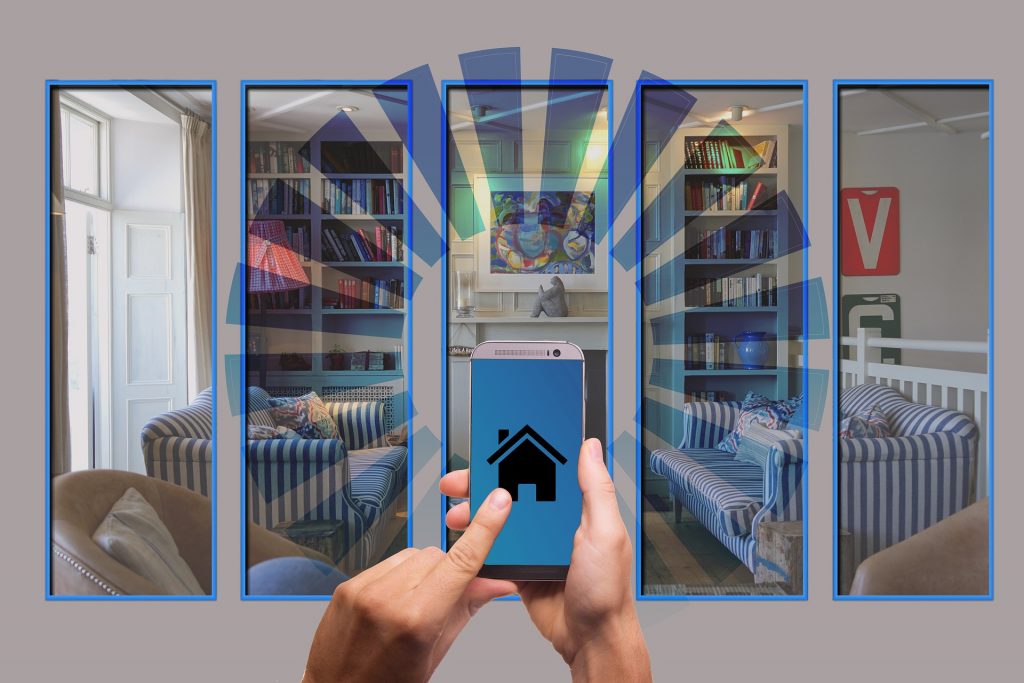
Smart homes are one of the common examples of IoT today. It is slowly and steadily becoming a part of our everyday lives worldwide.
North American users may spend the most on smart home systems in 2022.
Moreover, home automation led IOT-enabled connectivity has a wide range of applications. These include gardening, lighting control, security, voice assistants, air and water quality monitoring, locks, switches, energy, and water meters.
Smart Cities
Smart cities are already deploying IoT to manage traffic congestions and understand traffic in a better way.
Traffic lights feature IoT-backed sensors hat automatically alter the waiting time according to the congestion.
The public is also becoming connected to the smart cities using apps to access the closest parking space and other valuable data. Did you know Copenhagen is trying to become the first co2 neutral smart city by 2025?
Smart Cars
Today, IoT integrated cars are communicating with drivers and easing most of the work.
IoT is also being used to improve road safety, lower pollution, and energy spend. 70% of automobiles will be connected to the internet by 2023.
According to Juniper research, most IoT automobile payments by 2021 will be or fuel and toll. Also, we may even see vehicles paying for their own insurance.
The technology in the future will also allow engineers to convert roads into energy sources. We will see the use of solar energy to power electric vehicles.
Farming
Internet of Things (IoT) is altering many aspects of everyday agricultural operations and pushing the future to the next level.
Also, it is now allowing farmers to boost agro operations by lowering waste, streamline livestock management, and better pest control.
Moreover, high technology farms are already becoming a standing. All thanks to the innovation of sensors and agricultural drones.
Work
Nowadays, more and more people will be managing their work online and spending less time in offices.
Did you know every second, 127 devices are linked to the internet? As per the research, companies will invest $1.1 trillion in the Internet of Things by 2023.
In addition, numerous companies are now adding IoT devices at the office entrances to track the individuals entering and leaving the premises.
Takeaway
IoT is the new era of “connectedness” that we hear everywhere. Moreover, with technological advancements being made every day, it would be interesting to see what direction IoT will take in the upcoming years. The technology along with Artificial Intelligence and Blockchain is improving the economy.

by Dr. Jane Fitzgerald | Oct 5, 2020 | Industrial IoT
DynaGrace Enterprises, a Data Science, Emerging Technology, and IIoT Automation WOSB Firm, has added another quality line of products to the GSA Multiple Award Schedules (MAS).
Our GSA MAS federal government contracting vehicle enables us to reach more facility managers focused on clean energy initiatives. By modernizing facilities to updated codes, standards, and green building modern technologies, help them achieve their energy goals. Modernizing facilities keep workers safe and healthy. By adding building automation products from The S4 Group increases our ability to provide products that keep workers safe and save energy. ~Linda Rawson, President and Founder of DynaGrace Enterprises
Ideal Solution
The S4 Group’s suite of S4 Open Appliances is an ideal solution for building operators looking for technology to support retrofits and upgrades of buildings with legacy, proprietary building automation systems. The S4 technology facilitates a coordinated, phased approach, avoiding the cost and disruption of a brute force rip-and-replace approach.

The S4 Open: BACnet-N2 Router from the S4 Group
The S4 Open Appliances integrate installed legacy BAS systems and introduce the best of current breed generation standards-based operator workstations. The appliances provide, global control, and value-added applications such as analytics, energy management, or continuous commissioning. The S4 Open Appliances are the only products that provide co-existence with legacy head-end technology. The products become the first step in a long-term plan to replace legacy field devices with current generation open systems. Especially when budget and occupancy requirements can be best accommodated.
Upgrading Legacy Building Automation Systems
Providing technology to quickly and cost-effectively upgrade and transition legacy Building Automation Systems to current BACnet-based technology is an exciting prospect. Especially for helping DoD and other Government entities. The availability of the same capabilities previously offered to commercial building owners will help DoD make their buildings more energy-efficient, and improve indoor environments, resulting in more productive occupants. ~Steve Jones, The S4 Group
DynaGrace Enterprises and The S4 Group have teamed up to enable the transition of older facilities to BACnet-enabled smart buildings. Energy efficiency, indoor air quality, occupant safety, and comfort are all improved. Facility managers across the government sector will benefit from better visibility to the status of their buildings. The managers will also enjoy better options to control operations.
Customers can learn more about DynaGrace Enterprises by visiting the company’s website at DynaGrace.com or by calling the company directly at 888-676-0058. DynaGrace Enterprises is a Data Science, Emerging Technology and IIoT Automation Firm located in Utah.

by Machelle | Jun 25, 2018 | Cybersecurity, General
The signing of the Modernizing Government Technology Act (MGT) was in December 2017. Federal security operations for several years have been using hardware and software that are needing to be more modern. Obsolete technology has posed challenges in protecting the nation cyberspace and vital national data from cyber-attacks.
Making Room for New Technology
What is the Modernizing Government Technology Act
The government spends about 75% allocation to information technology. This spending is maintaining and ensuring that these outdated information technology systems remain operational. The risks these systems pose are a result of their inability to utilize current security practices. It includes multifactor authentication and data encryption. They are also expensive and always fail to fulfill the mission requirement and vulnerable to malicious software.
Against the backdrop, in a bid to address these issues, the Modernizing Government Technology (MGT) Act was passed by the legislatures. Through this

means, the government can empower federal agencies to effectively discharge their duties with regards to cybersecurity and information technology services.
The primary purposes of the Modernizing Government Technology (MGT) Act are to:
Curtail current and operational risk of the information technology systems of federal agencies by ensuring that they are compliant with recent security technology.
Assist the federal government in cutting cost with regards to information technology via modernization
Hasten the acquisition and application of modernized information technology practices such as cloud computing, data encryption and lots more through the provision of stable funding and transparent acquisition procedures.
Benefits of the Modernizing Government Technology (MGT) Act
Federal IT experts in some quarters are of the opinion that the MGT Act is long overdue. Nevertheless, the law has lots of benefits with regards to operational ease, data security, and investment opportunities. The following are the significant benefits:
Access to capital funds that will boost the modernization of IT systems:
MGT Act gives room for heads of different agencies to access working capital funds. These funds can be used to update or replace existing IT systems with modern state-of-the-art information technology systems. Also to adopt and train their staff on new risk–inclined cybersecurity measures.
The Funds
The funds can be utilized by agencies to ensure a smooth transition from legacy IT systems to cloud. Or, a shared service to boost security and effectiveness in the discharge of their duties serving the American people.
This gesture will empower these agencies to reprogram or transfer funds. This includes those earmarked for the maintenance of obsolete IT systems for other variety of projects or investments which are within its mandate as a federal agency.
However, monitoring the utilization of these funds are required to submit comprehensive reports regarding the expenditures and balances every six months. These reports are made public for the sake of accountability.
Migration to cloud systems:
The MGT Act will hasten up the movement to a Cloud system. This migration is more cost-effective and has access to another realm of innovation that associated with cloud systems. It also offers a more secure means to handle data.
Expect that these agencies will, for the sake of providing better services, jettison the legacy system for more efficient digital technology. A good example is the network modernization that allows Chief Information Officers (CIO) to know what exactly happens in their operations.
Although there are critics of the MGT Act, who say that the Act is a misguided venture, the benefits will improve the lives of the American people.
Resources: https://www.fedscoop.com/trump-signs-mgt-act-law/; https://www.whitehouse.gov/about-the-white-house/the-legislative-branch/; https://www.investopedia.com/terms/c/capital-funding.asp; https://www.techopedia.com/definition/635/legacy-system
Images by: Business Technology – Cyber Security [www.bluecoat.com/; https://www.flickr.com/photos/111692634@N04/]; US Capital https://pxhere.com/en/photo/738025

by Linda Rawson | Nov 14, 2017 | Cybersecurity, General

BlockChain
Blockchain refers to the technology behind the creation of Bitcoin.
It is a shared, reliable, trusted, public ledger of transactions which is accessible to everyone for inspection but which is not under the control of any single user. Blockchains refer to distributed databases in which a continuously growing list of data transaction records are maintained, and cryptographically secured from illegal revision and tampering.
There are two kinds of records in a blockchain database, transactions, and blocks. Blocks clasp batches of valid transactions that are hashed and also encoded into a Merkle tree. Each block contains the hash of the previous block in the blockchain, thereby connecting the two.
In 1991, Stuart Haber and W. Scott Stornetta described the first work on a cryptographically secured chain of blocks, but in 2008 an anonymous person or team known as Satoshi Nakamoto with the real identity cloaked in secrecy conceptualized the first distributed blockchain.
The bitcoin blockchain file size has been growing rapidly, in August 2014; it has expanded from 20 GB to over 100 GB in size.
There are three main types of blockchains, public blockchains, federated blockchains, private blockchains.
Public Blockchains
The protocols of Public Blockchains are based on Proof Of Work (POW) consensus and robust algorithm with open source, meaning everyone can participate in them and explore them. It also signifies that any interested person can download the code and begin running a public node on their local device and validate transactions in the network, thus effectively participating in the consensus process. Public blockchains also allow anyone in the world to read and use the network to send transactions and expect to see them added to the blockchain provided the transaction is valid.
Examples of Public Blockchains are Ethereum, Bitcoin, Dash, Monero, Dogecoin, Litecoin, etc.
Federated Blockchains or Consortium Blockchains
Consortium Blockchains is the type of blockchains which operate under a group’s leadership. Unlike in Public Blockchains, a person with an independent internet connection is not allowed to take part in the verification of transactions process.
Federated or consortium blockchains are faster and provide more privacy for transactions. They are mostly used in the banking sector, and the consensus process is strictly under the control of a pre-selected set of nodes. For instance, a consortium of 16 financial companies each of which is operating a node, and out of which 11 must sign every block for the block to be valid. Under this type of blockchain, the right to read the block may be limited to the participants only or open to the public.
Examples of Federated Blockchains are EWF (Energy), B3i (insurance), R3 (Banks), Corda.
Private Blockchains
These are blockchains where permission to read may be public or limited to an arbitrary extent, while write permissions are centralized to one organization. Applications that are allowed under Private Blockchains are likely to be database management, auditing, and more which are internally limited to one company, and may never require public readability.
Private BlockChains offers the benefit of setting up groups and participants for internal verification of transactions, and they readily comply with state regulations on data privacy rules.
Examples of Private Blockchains are Multichain, MONAX.
The use of the blockchain for bitcoin is widely known to be the first cryptocurrency to solve the double spending problem without the need of a trusted administrator, and because of this, it is the most commonly traded digital currency till date. The global blockchain market of bitcoin is anticipated to worth over $20 billion by 2024. With this wide expectation, one can easily ask this question: Is cryptocurrency the evolution of money? With the way bitcoin blockchain file size grew in the last years, it has achieved just that to become the first digital currency to fit in this definition for creating the question.
Linda Rawson is the CEO, and Founder of DynaGrace Enterprises, (http://DynaGrace.com) which is a Women-Owned, 8(a) Minority, Small Business. She is also the author of The Minority and Women-Owned Small Business Guide to Government Contracts.
Resource; https://www.cloudwards.net/what-is-bitcoin/